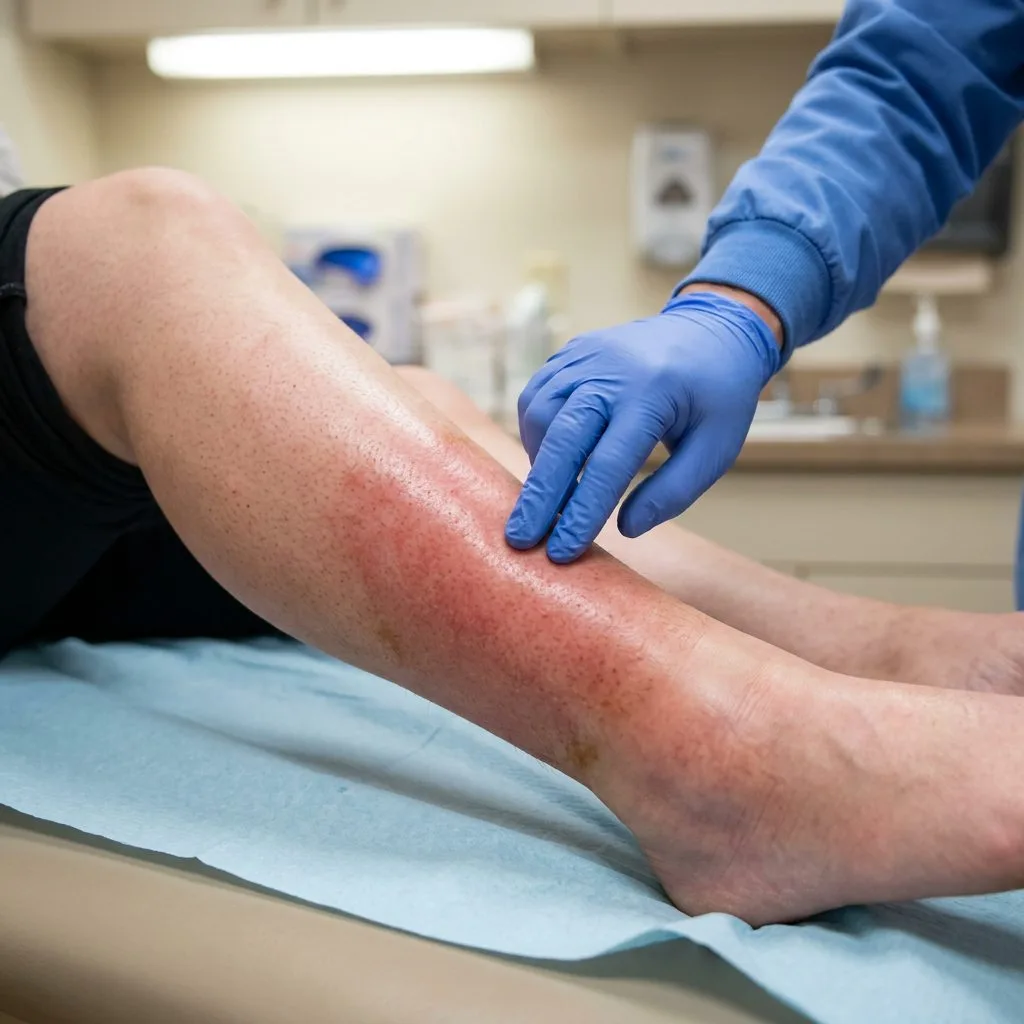
What is cellulitis?
Cellulitis is a bacterial infection of the skin and subcutaneous tissues — usually Strep or Staph. Often follows skin injury (cut, insect bite, athlete's foot, eczema), but sometimes occurs spontaneously.
Most cases respond to oral antibiotics. Severe or rapidly spreading cases need IV antibiotics and in-person evaluation.
Do I have cellulitis? Common signs
If most of these describe what you're experiencing, telehealth may be a good next step:
What causes it
Bacterial infection — usually Group A strep or Staph aureus (including MRSA). Enters through any skin break: cuts, insect bites, athlete's foot, eczema, surgical sites. Risk factors: diabetes, lymphedema, peripheral vascular disease, IV drug use, immunosuppression.
Is it contagious?
Generally not person-to-person, but underlying skin condition or MRSA strain may have implications.
Draw a line around the redness with a marker — if it expands beyond that line in 24 hours, you need to escalate quickly.
Can it be treated online?
Routine cellulitis without systemic symptoms is well-suited to telehealth with close follow-up. Rapidly spreading, severe pain (out of proportion to appearance — possible necrotizing fasciitis), fever, immunocompromise, diabetic patient, facial cellulitis, or treatment failure — need in-person care, possibly IV antibiotics.
How cellulitis is treated
Cephalexin 500mg 4x daily — most common first-line. Dicloxacillin alternative. Clindamycin if penicillin-allergic or MRSA concern. TMP-SMX (Bactrim) or doxycycline for MRSA. Treatment typically 5–7 days. Mark borders to track progression. IV antibiotics for severe.
Self-care while you wait
- Mark the border of redness with pen — track for spread
- Elevate affected area
- Apply warm compresses
- Pain control with NSAIDs
- Treat any underlying skin condition (athletes foot, eczema)
- Keep area clean and dry
- Don't pop blisters
- Take all antibiotics, even if better
How long does it last?
Improvement in 2–3 days on appropriate antibiotics; full resolution 1–2 weeks.
Frequently asked questions
Should I be worried about flesh-eating bacteria?
Necrotizing fasciitis is rare. Severe pain disproportionate to appearance, rapid spread, dark areas, systemic illness — go to ER immediately.
Why does cellulitis keep coming back?
Recurrent cellulitis often has underlying cause: chronic athlete's foot (breaks skin barrier), lymphedema, eczema. Address those.
Is it the same as MRSA?
MRSA can cause cellulitis — antibiotic choice differs. Suspected MRSA based on risk factors and prior infections.
Can I take Bactrim or doxycycline?
Yes if concern for MRSA, especially with abscess. Cephalexin alone may not cover MRSA.
How long until I'm not contagious?
Cellulitis itself usually not person-to-person contagious. MRSA on skin can spread by direct contact — cover area, wash hands.