What is skin infection?
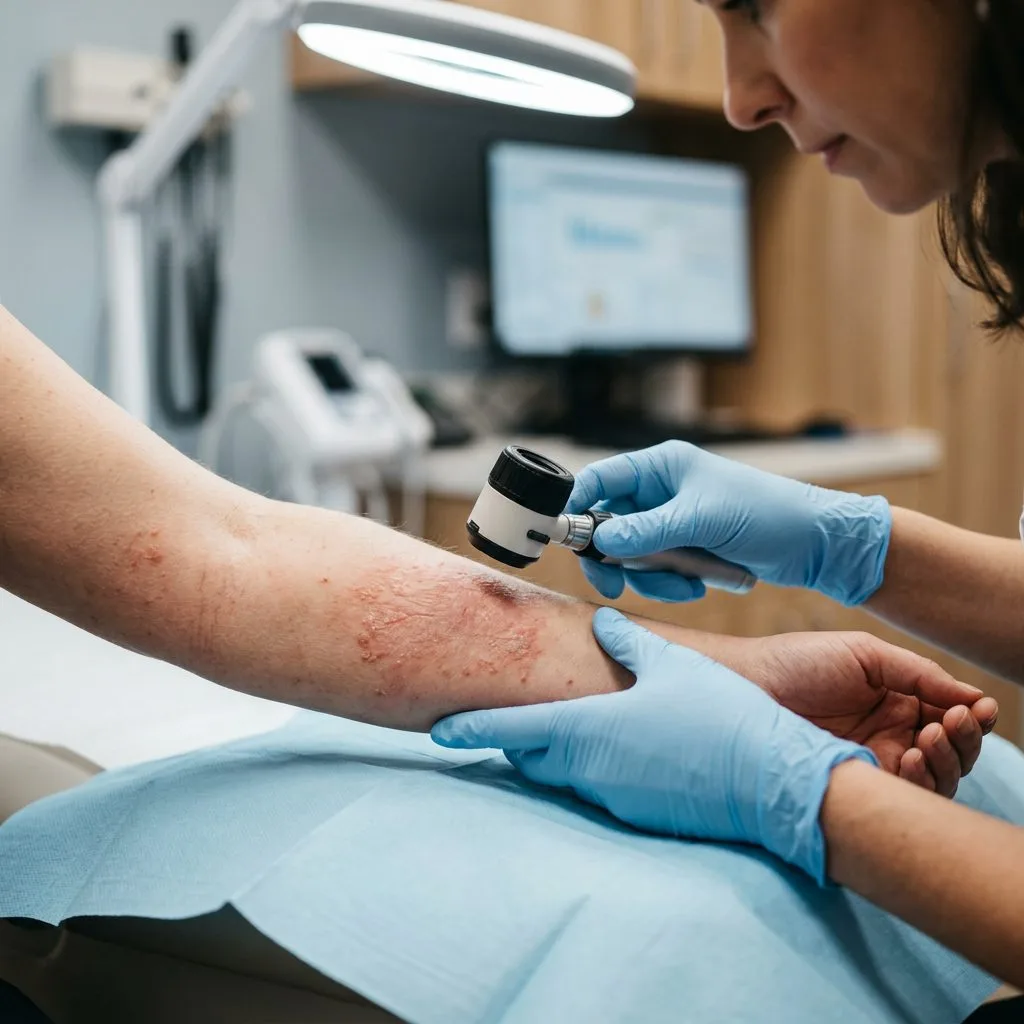
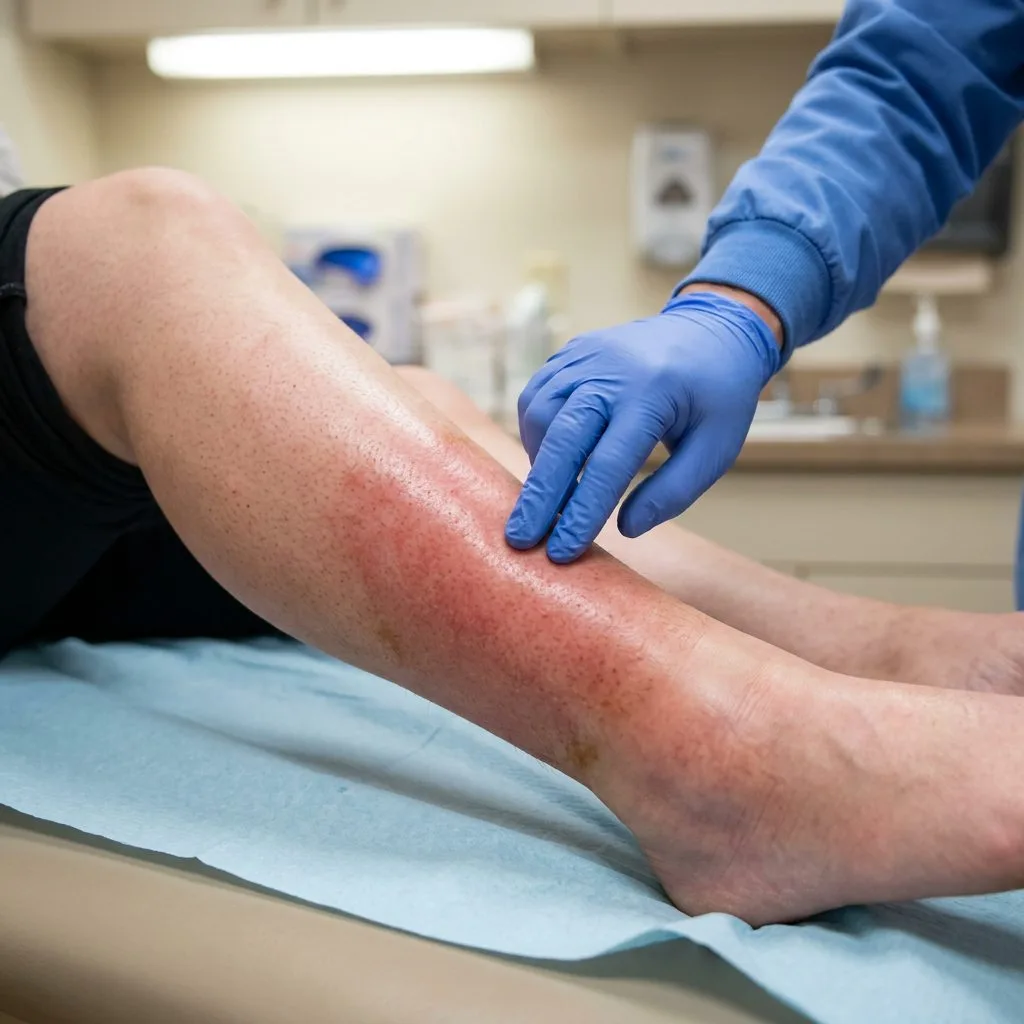
Bacterial skin infections come in several flavors. Cellulitis is a deeper infection causing a spreading area of red, warm, swollen, tender skin — usually on the lower leg or arm. Impetigo is a more superficial infection causing honey-crusted sores, common in children. Folliculitis is inflammation of hair follicles. Abscesses are pockets of pus that often need drainage.
Most uncomplicated cellulitis and impetigo respond well to oral antibiotics. Worsening rapidly, fever, or extensive involvement warrants in-person care and sometimes IV antibiotics.
Key early action: mark the edge of the red area with a pen. Spread past the line within 24 hours = infection is progressing despite or without treatment — needs urgent evaluation.
Do I have skin infection? Common signs
If most of these describe what you're experiencing, telehealth is a reasonable next step:
What causes it
Most cellulitis is caused by group A Streptococcus or Staphylococcus aureus (sometimes MRSA, methicillin-resistant Staph). Impetigo is also typically Staph or Strep. Bacteria enter through a break in the skin — cut, scratch, insect bite, athlete's foot, eczema. Risk factors include diabetes, immune suppression, IV drug use, lymphedema, and any condition that compromises skin integrity.
Is it contagious?
Cellulitis is generally not contagious through casual contact. Impetigo is highly contagious — especially in children — through skin-to-skin contact and shared towels, sheets, or clothing. MRSA skin infections require precautions to avoid spread within households.
Mark the edge of redness with a pen — if it's spreading past your mark in 24 hours, that's a red flag.
Can it be treated online?
Telehealth is well-suited to most uncomplicated skin infections. A clear photo plus your history (when it started, how it's changing, fever?, prior treatments?) is usually enough for the clinician to start the right antibiotic. We mark the edge with you, set return precautions, and follow up.
In-person evaluation is needed for: rapidly spreading infections, deep abscesses needing drainage, suspected necrotizing fasciitis, infections in young children or immunocompromised patients, or worsening despite oral antibiotics.
How skin infection is treated
Uncomplicated cellulitis: oral cephalexin (Keflex) or dicloxacillin for 5–7 days. If MRSA is suspected (prior history, abscess), clindamycin or trimethoprim-sulfamethoxazole.
Impetigo: topical mupirocin (Bactroban) for limited disease; oral cephalexin or dicloxacillin for more extensive cases.
Abscesses: usually need incision and drainage by a clinician; antibiotics added in some cases.
Self-care while you wait
- Mark the edge of the red area with a pen and watch for spread
- Elevate the affected limb when possible
- Apply warm compresses several times a day
- Take ibuprofen or acetaminophen for pain
- Don't pop or squeeze any boils or pustules
- Keep the area clean and lightly covered
- Wash hands and avoid sharing towels or clothing (especially for impetigo)
- Treat any underlying skin issues (athlete's foot, eczema) to prevent recurrence
How long does it last?
On the right antibiotic, most cellulitis starts to improve within 48–72 hours. The red area may take a week or two to fully fade, and skin can stay slightly discolored for weeks after the infection clears. Impetigo usually clears within a week of starting treatment.
Frequently asked questions
Why is my cellulitis getting worse on antibiotics?
Could be the wrong antibiotic (e.g., MRSA when you got a non-MRSA agent), inadequate dosing, an underlying abscess that needs drainage, or something other than cellulitis. If you're not improving by 48–72 hours, get re-evaluated.
Is this MRSA?
MRSA is more likely if you have a history of MRSA, IV drug use, recent hospitalization, contact sports, or a draining abscess. We adjust antibiotic choice based on these risk factors and local resistance patterns.
Will I need IV antibiotics?
Most uncomplicated outpatient cellulitis responds to oral antibiotics. IV is needed for rapidly progressive infections, fevers not controlled by oral therapy, infections in unusual locations (face, joints), or patients who can't tolerate oral medications.
How can I prevent recurrence?
Keep skin moisturized, treat athlete's foot or other skin breakdown, manage edema (compression for chronic swelling), control diabetes if applicable, and address any source of bacteria (chronic wounds, ulcers).
Why does my cellulitis keep coming back?
Recurrent cellulitis often has an underlying cause — venous insufficiency, lymphedema, persistent skin breaks, or biofilm in chronic wounds. Sometimes long-term low-dose antibiotic prophylaxis is used.