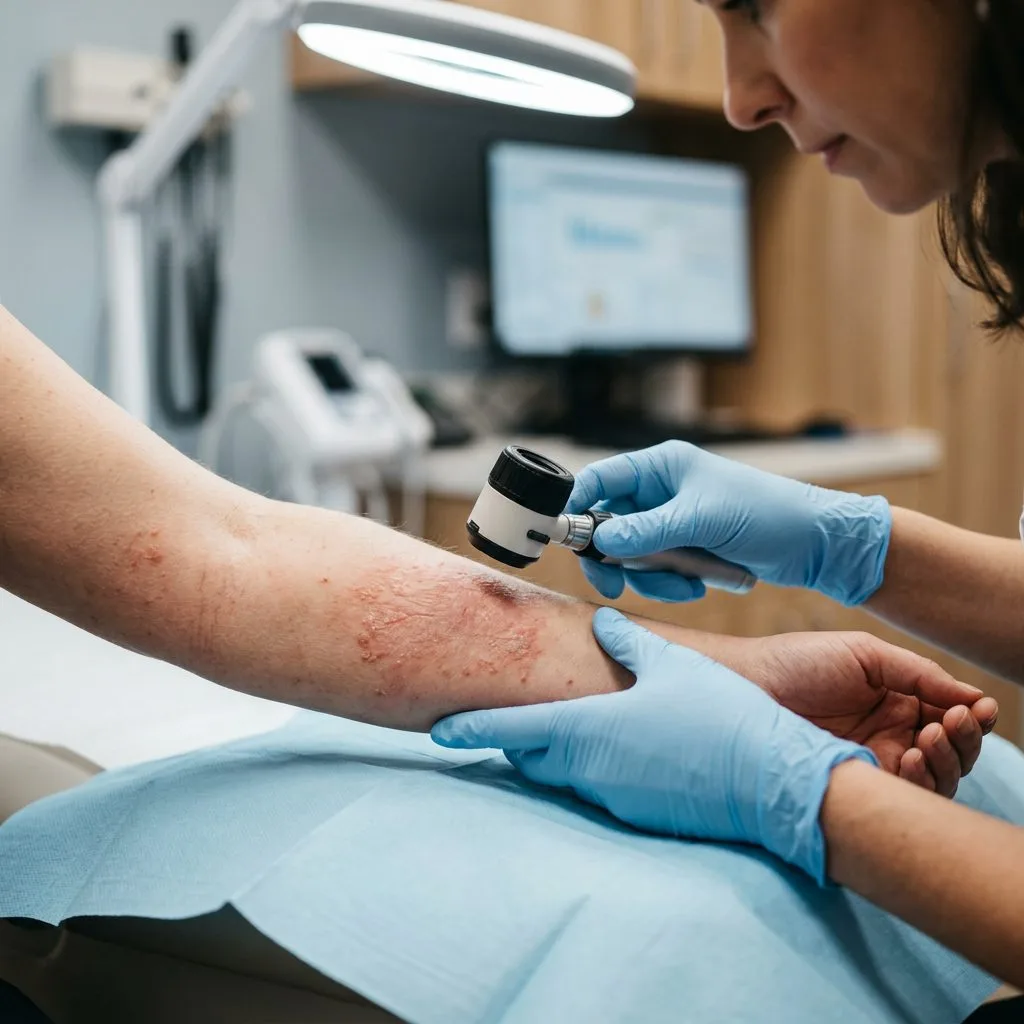
Itchy, peeling, cracked, or scaly skin between the toes or on the soles is athlete's foot (tinea pedis), a very common fungal infection. The most useful step is an over-the-counter antifungal cream, spray, or powder (terbinafine or clotrimazole) used for 2 to 4 weeks, plus keeping feet clean, dry, and out of damp shoes and socks. Stubborn or recurring cases may need a prescription antifungal. A licensed clinician can confirm it from photos online and send a prescription to your pharmacy the same day when needed.
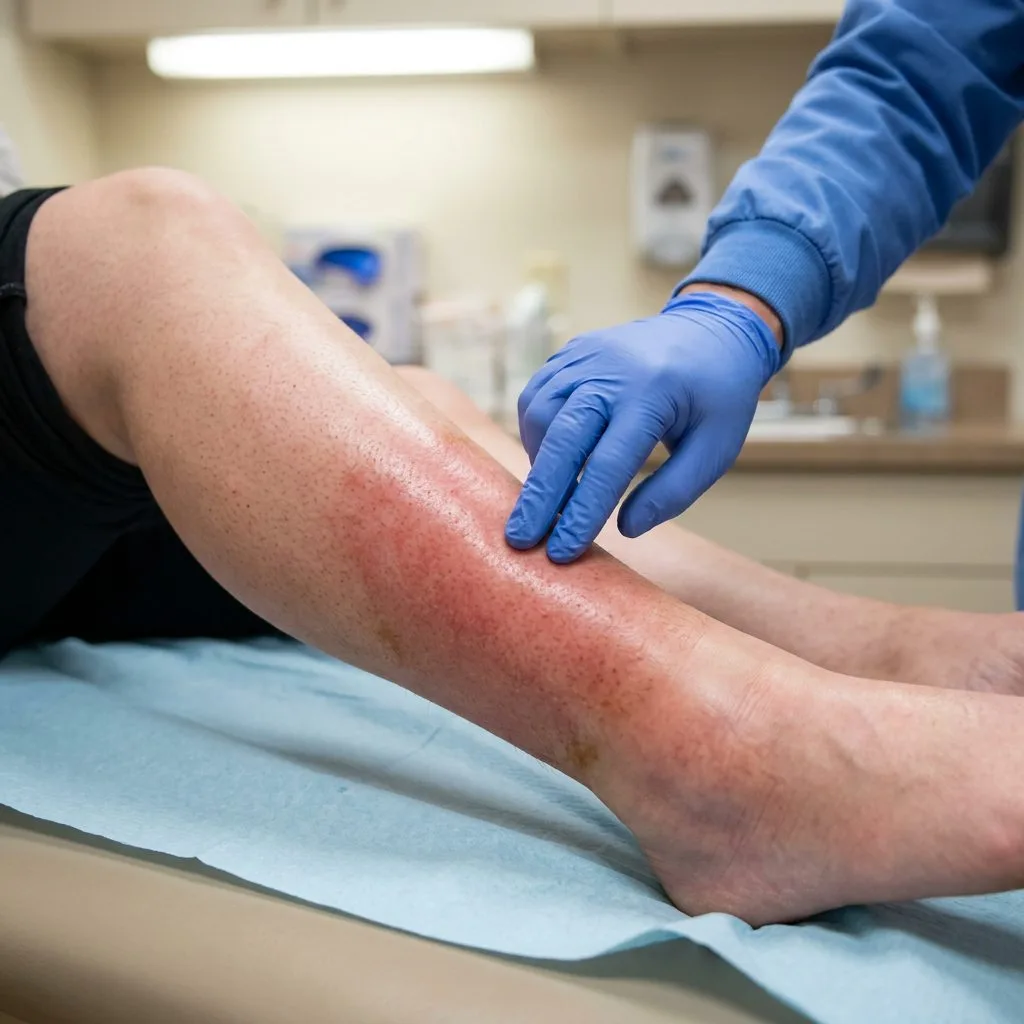
Seek emergency care if: you have spreading red streaks up the foot or leg, fever, or rapidly worsening redness and pain — this can mean cellulitis. People with diabetes should have any concerning foot symptoms checked in person.
See a clinician nowWhat is athlete's foot?
Athlete's foot (tinea pedis) is a fungal infection of the feet, most commonly between the toes or on the soles. It's extremely common — picked up in gyms, locker rooms, swimming pool decks, communal showers.
It's annoying but rarely serious. Most cases respond to OTC topical antifungals; stubborn cases benefit from prescription topicals or oral antifungals.
Do I have athlete's foot? Common signs
If most of these describe what you're experiencing, telehealth may be a good next step:
What causes it
Dermatophyte fungi (Trichophyton species). Grow in warm, moist environments. Risk factors: sweaty feet, tight shoes, walking barefoot in public showers/gyms, immunosuppression, diabetes.
Is it contagious?
Yes — through direct contact with infected skin or surfaces (towels, floors, shoes). Easily spread within households.
The trick is to keep treating for at least 2 weeks after it looks gone — fungi linger.
Can it be treated online?
Athlete's foot is well-suited to telehealth. Photos confirm. Severe, secondary bacterial infection, or diabetic patients with concerning foot symptoms need in-person care.
How athlete's foot is treated
Topical antifungals: terbinafine (Lamisil) cream/spray, clotrimazole, miconazole, ketoconazole — apply twice daily for 2–4 weeks (continue 1 week after clearing). For stubborn or extensive cases, oral terbinafine (250mg daily for 2–6 weeks) clears it more reliably. Nail involvement needs longer oral treatment.
Self-care while you wait
- Keep feet dry — towel-dry thoroughly between toes
- Change socks daily, more if you sweat heavily
- Rotate shoes — don't wear the same pair every day
- Cotton or moisture-wicking socks
- Avoid walking barefoot in public showers/gyms
- Antifungal foot powder in shoes
- Don't share towels, shoes, or socks
How long does it last?
With treatment, most cases resolve in 1–2 weeks but require 4 total weeks of treatment to prevent recurrence. Nail involvement takes months.
Frequently asked questions
Can I just keep using OTC creams?
Yes for most cases. If 4 weeks of consistent OTC treatment isn't working, prescription strength or oral antifungals help.
Will it spread to my nails?
Possibly, especially if untreated. Nail fungus is harder to clear and usually needs oral medication.
Will my feet get it again?
Often, yes — fungi are everywhere. Prevention is keeping feet dry, rotating shoes, antifungal powder in shoes.
Is it the same as ringworm?
Same family of fungi, different location. Same treatments work.
Why won't it clear?
Common reasons: stopped treatment too early, sweating excessively, untreated reservoir (shoes, locker room), or it's not actually fungal — could be eczema, contact dermatitis, or psoriasis.