What is whooping cough?
Pertussis (whooping cough) is a highly contagious respiratory infection caused by Bordetella pertussis. Most dangerous in infants under 1 year. Adolescents and adults often have milder but prolonged illness.
Antibiotics reduce contagiousness but don't shorten the disease much if started after the catarrhal phase. Vaccination (Tdap) prevents most cases.
Do I have whooping cough? Common signs
If most of these describe what you're experiencing, telehealth may be a good next step:
What causes it
Bordetella pertussis bacteria. Highly contagious through respiratory droplets. Waning immunity in adolescents and adults a major source of transmission to vulnerable infants.
Is it contagious?
Yes — highly. From start of symptoms through ~3 weeks of cough, or 5 days after starting antibiotics.
The classic '100-day cough' isn't an exaggeration — pertussis cough can last months even with treatment.
Can it be treated online?
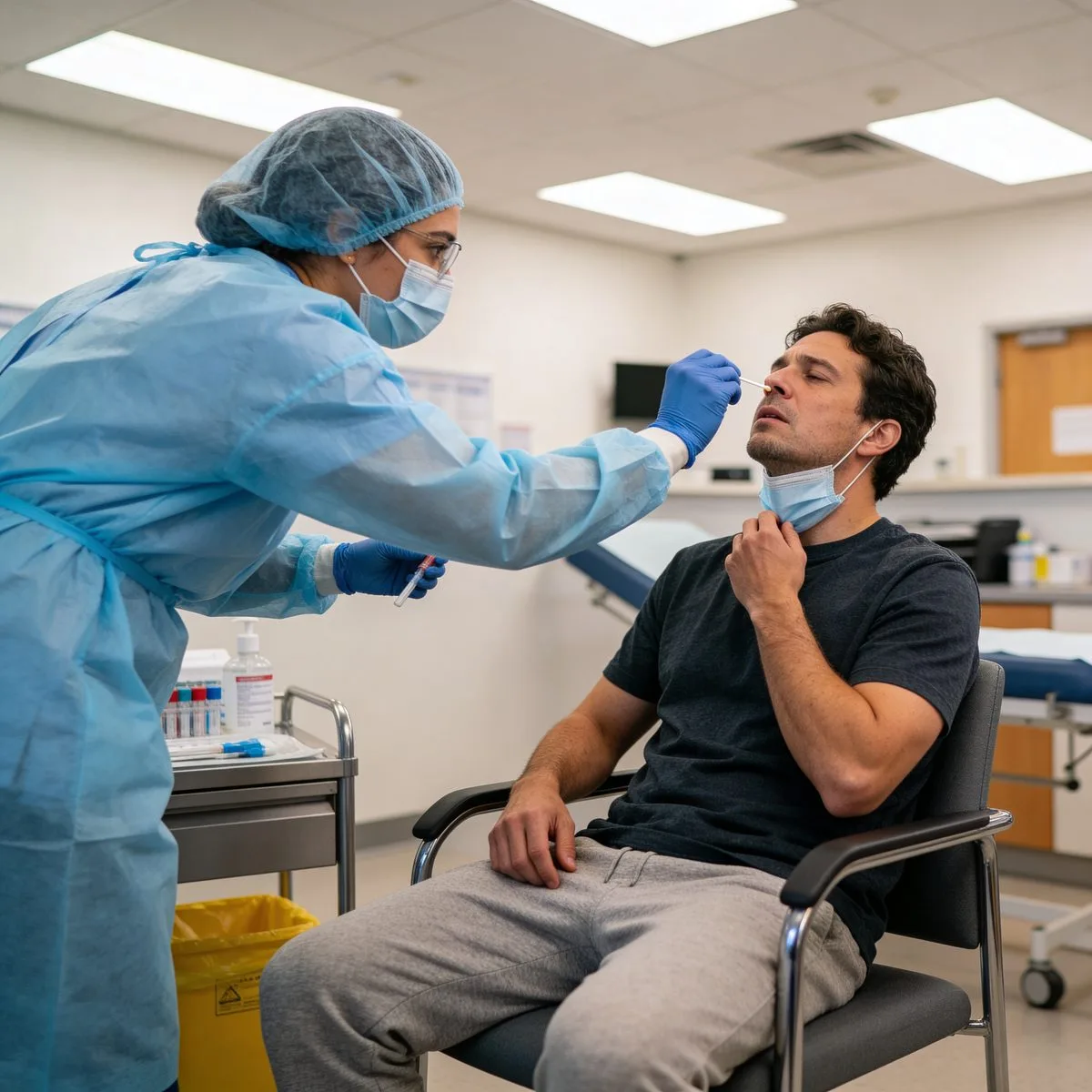
Pertussis in adults/adolescents is well-suited to telehealth — clinical diagnosis usually adequate. Infants under 1 year, severe cases with hypoxia or apnea, pregnant women, immunocompromised — need in-person care immediately.
How whooping cough is treated
Azithromycin 500mg day 1, 250mg days 2–5 — first-line. Clarithromycin alternative. Most effective if started in catarrhal phase (first 1–2 weeks). After that, treatment mainly reduces transmission. Post-exposure prophylaxis for close contacts. Tdap booster for prevention.
Self-care while you wait
- Rest
- Hydration
- Small frequent meals — coughing fits cause vomiting
- Cool quiet environment
- Humidifier
- Avoid coughing triggers
- Stay away from infants and pregnant women
- Cover cough
- Wash hands frequently
- Get Tdap if due — protects others
How long does it last?
Catarrhal phase: 1–2 weeks. Paroxysmal phase: 2–6 weeks. Convalescent phase: weeks to months. Total: often 6–10 weeks.
Frequently asked questions
How do I know it's pertussis vs other cough?
Severe coughing fits, especially with vomiting, lasting weeks, often without much fever. PCR testing can confirm if needed.
Will antibiotics shorten my illness?
If started early (within 1–2 weeks of symptoms), some reduction. After cough is established, mainly reduces contagiousness.
Should I get Tdap booster?
Yes if hasn't been within 10 years. Especially important if you'll be around babies. Pregnant women get Tdap at 27–36 weeks for each pregnancy.
How long until I can be around my newborn niece?
Until 5 days of antibiotics completed and you're not actively coughing — ideally check with pediatrician.
Will the cough ever go away?
Yes — but it takes time. 'Hundred-day cough' is real. Cough hyperactivity persists weeks beyond infection.