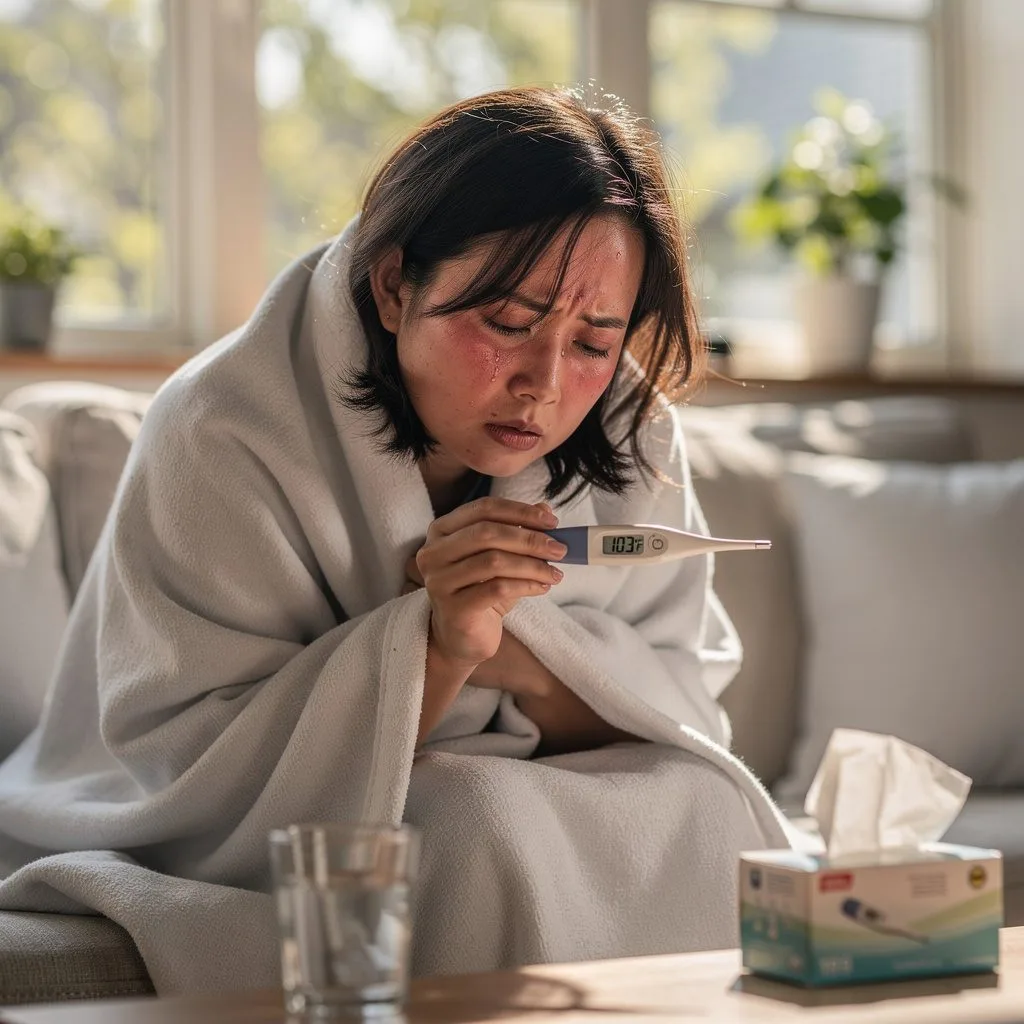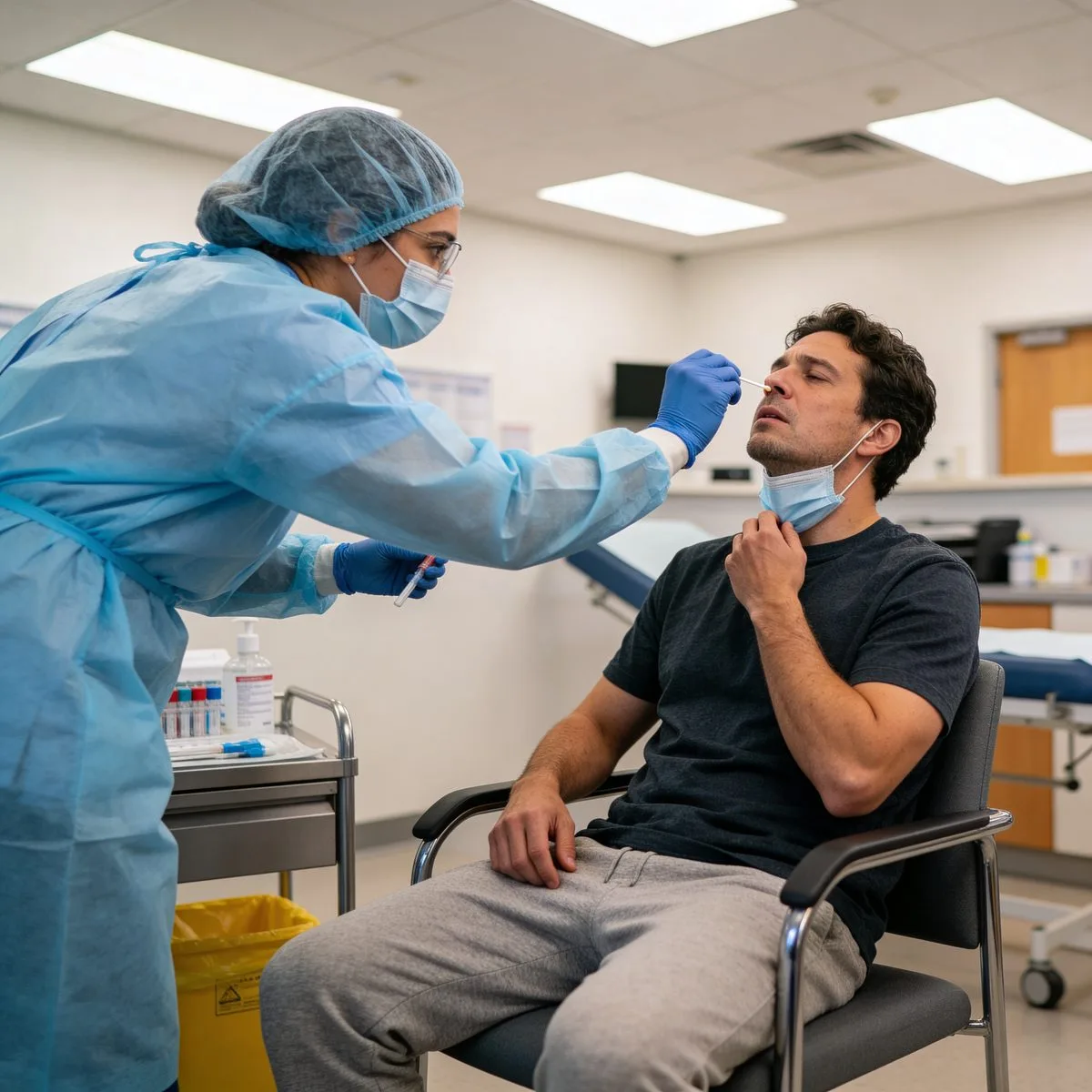
A positive test or symptoms like sore throat, cough, congestion, fatigue, and fever most likely mean COVID-19. The most useful step depends on your risk: if you're 50+ or have conditions like diabetes, heart, lung, or immune problems, prescription antiviral Paxlovid started within the first 5 days can cut the risk of severe illness, so getting evaluated early matters. Most others recover at home with rest, fluids, and fever reducers. A licensed clinician can review your symptoms and risk factors online and send Paxlovid to your pharmacy the same day if you qualify.
Seek emergency care if: you have trouble breathing, persistent chest pain or pressure, new confusion or inability to stay awake, bluish lips or face, or an oxygen level persistently below 92% — go to the ER immediately.
See a clinician nowWhat is covid-19?
COVID-19 is a respiratory illness caused by SARS-CoV-2. Most people with current strains experience mild to moderate symptoms similar to a bad cold or flu and recover at home in 1–2 weeks. Some experience prolonged symptoms ("long COVID") that can last months.
Vaccinated and healthy people often have mild courses. High-risk patients — older adults, immunocompromised, pregnant, those with diabetes, heart disease, lung disease, kidney disease, or obesity — face higher risk of severe illness. For these patients, antiviral medication makes a substantial difference.
The most effective antiviral is Paxlovid (nirmatrelvir/ritonavir), which must be started within 5 days of symptom onset to be most effective.
Do I have covid-19? Common signs
If most of these describe what you're experiencing, telehealth is a reasonable next step:
What causes it
SARS-CoV-2 is transmitted by respiratory droplets and aerosols. Indoor crowded settings, prolonged close contact, and poor ventilation increase risk. Variants continue to emerge — each can differ slightly in transmissibility and symptom profile but the core treatment approach has been stable.
Is it contagious?
Yes — typically from 1–2 days before symptoms until 5–10 days after. CDC guidance varies, but isolation through at least day 5 of symptoms (or 5 days from positive test if asymptomatic) plus return only when fever-free for 24 hours without medication and symptoms are improving is a common approach.
Paxlovid is genuinely game-changing for high-risk patients — but only within five days of symptom onset.
Can it be treated online?
COVID is one of telehealth's strongest use cases. Patients are often already isolating at home, and the critical decision — whether to start Paxlovid — requires checking eligibility criteria and a careful medication interaction review, which a clinician can do without a physical exam. We prescribe Paxlovid same-day to eligible patients and follow up to monitor course.
How covid-19 is treated
Paxlovid (nirmatrelvir/ritonavir): 5-day oral course for high-risk patients with mild-to-moderate symptoms, started within 5 days of symptom onset. Significantly reduces hospitalization and death. Has many drug interactions — the medication list must be reviewed carefully before prescribing.
Molnupiravir (Lagevrio): alternative oral antiviral when Paxlovid isn't suitable.
Supportive care for all: rest, fluids, acetaminophen or ibuprofen for fever and aches, monitoring oxygen levels with a pulse oximeter if at risk.
Self-care while you wait
- Rest and isolate from household members when possible
- Drink plenty of fluids
- Wear a well-fitted mask around others through day 10
- Monitor oxygen saturation with a pulse oximeter (call us if below 94%)
- Take acetaminophen or ibuprofen for symptom relief
- Sleep on your stomach or side to help breathing if shortness of breath
- Get up to date on vaccinations once recovered
How long does it last?
Most people feel significantly better within 1–2 weeks. Cough and fatigue can persist longer. Loss of taste and smell often improves within 1–3 months but can linger longer. Long COVID — persistent symptoms beyond 3 months — affects a meaningful minority and needs ongoing evaluation.
Frequently asked questions
Am I eligible for Paxlovid?
Paxlovid is generally for adults with mild-to-moderate COVID who are at higher risk: age 50+, immunocompromised, pregnant, or with conditions like diabetes, heart disease, lung disease, kidney disease, or obesity. Drug interaction screening is required.
What about the rebound?
About 5% of Paxlovid-treated patients have a symptom rebound a few days after finishing the course. It's usually mild and self-limited. Even with the rebound risk, Paxlovid significantly reduces severe outcomes and is still recommended for eligible patients.
How long should I isolate?
CDC guidance has shifted toward isolation through day 5 with fever-free for 24 hours and improving symptoms, then masking around others through day 10. Practices vary — work with your employer and reach out to us with questions.
Should I worry about long COVID?
Long COVID affects a meaningful minority. Risk factors include unvaccinated status, severe initial illness, and certain comorbidities. If symptoms persist beyond 4–8 weeks, ask for evaluation — we can guide further workup.
Is COVID still as serious as it was?
For most healthy vaccinated adults, current strains tend to be milder. But for high-risk patients, COVID still causes serious illness and death. Paxlovid and other treatments have meaningfully changed the calculus.