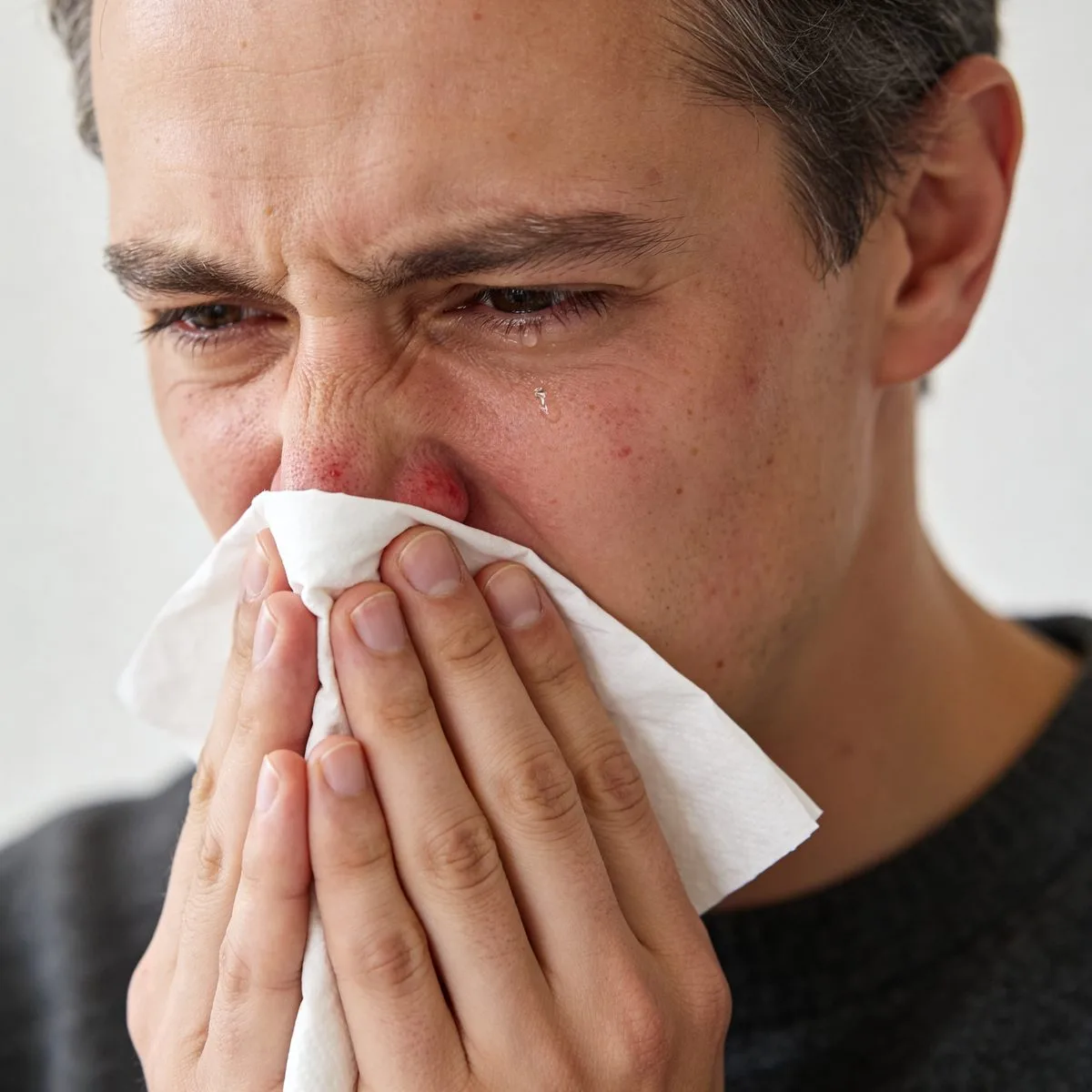
What is upper respiratory infection?
An upper respiratory infection (URI), commonly called a cold, is a viral infection of the nose, throat, and airways above the lungs. There are over 200 different cold-causing viruses, with rhinovirus accounting for 30–50%.
Adults typically get 2–3 colds a year; young children get 6–8 or more. Most last 7–10 days. The cold itself is harmless, but it can trigger or precede complications like sinus infections, ear infections, bronchitis, or asthma flares.
Distinguishing a cold from flu, COVID, strep, or sinus infection matters because the treatment differs. Telehealth is well-suited to that triage.
Do I have upper respiratory infection? Common signs
If most of these describe what you're experiencing, telehealth is a reasonable next step:
What causes it
Caused by hundreds of viruses, with rhinoviruses, coronaviruses (the common cold-causing ones, not SARS-CoV-2), adenoviruses, and respiratory syncytial virus (RSV) being most common. Transmitted by respiratory droplets, direct contact with secretions, or touching contaminated surfaces and then your face. Cold weather doesn't cause colds — but indoor crowding in winter does.
Is it contagious?
Yes — especially in the first 2–3 days when viral shedding peaks. You're generally contagious from the day before symptoms start until symptoms resolve, with maximum spread in days 2–4.
A cold doesn't need antibiotics — but telehealth is great for ruling out the things that do.
Can it be treated online?
Cold triage is one of telehealth's strengths. A clinician asks about symptom duration, severity, fever pattern, and exposures, then helps determine whether you have a simple cold, flu (especially in flu season — antivirals work if started within 48 hours), COVID (testing and antivirals available for high-risk patients), strep (if throat-dominant), or sinusitis (if facial pain and 10+ days). Treatment varies dramatically based on which it is.
How upper respiratory infection is treated
Most colds need supportive care only. Targeted help includes decongestants like pseudoephedrine or oxymetazoline (limit nasal sprays to 3 days), antihistamines if runny nose dominates, cough suppressants like dextromethorphan for dry cough or guaifenesin for productive cough, and throat lozenges. Antibiotics do not help colds and can cause harm. If symptoms point to flu, oseltamivir (Tamiflu) within 48 hours can shorten illness. If strep is suspected, antibiotics. If sinusitis or bacterial superinfection develops, then antibiotics may be appropriate.
Self-care while you wait
- Rest — your immune system uses energy to fight off the virus
- Drink fluids — water, soup, herbal tea, electrolyte drinks
- Use a humidifier or breathe steam from a shower
- Saline nasal spray or rinse
- Honey for cough (only for people over 1 year old)
- Zinc lozenges within 24 hours of symptom onset may shorten duration slightly
- Stay home to avoid spreading it to others
How long does it last?
Most colds run 7–10 days. Cough can linger 2–3 weeks. If you're not improving by day 10, or you've had "double-worsening" (got better then worse), it's time to reach out — that pattern often signals a bacterial complication like sinusitis.
Frequently asked questions
Will antibiotics help my cold?
No — colds are caused by viruses, which antibiotics don't affect. Taking antibiotics for a cold just contributes to antibiotic resistance and risks side effects without any benefit.
Cold, flu, or COVID — how do I tell?
Flu hits suddenly with high fever, severe body aches, and exhaustion. COVID often includes loss of taste/smell, cough, and shortness of breath, with very variable severity. Colds are milder, build slowly, and rarely cause significant fever in adults. Testing can resolve uncertainty.
When should I take Tamiflu?
Tamiflu (oseltamivir) is most effective when started within 48 hours of flu symptoms. It shortens flu by about 1 day and is especially worth considering for high-risk patients (over 65, pregnant, chronic conditions).
Why does my cough last so long after the cold is gone?
Post-viral cough can persist 2–3 weeks because the airways remain inflamed. If you wheeze, are short of breath, or the cough is worsening rather than improving, get evaluated — could be reactive airway, asthma flare, or bacterial superinfection.
Can I exercise with a cold?
The "neck check" rule: symptoms above the neck (runny nose, sore throat, sneezing) — light exercise is usually fine. Symptoms below the neck (chest congestion, body aches, fever) — rest.