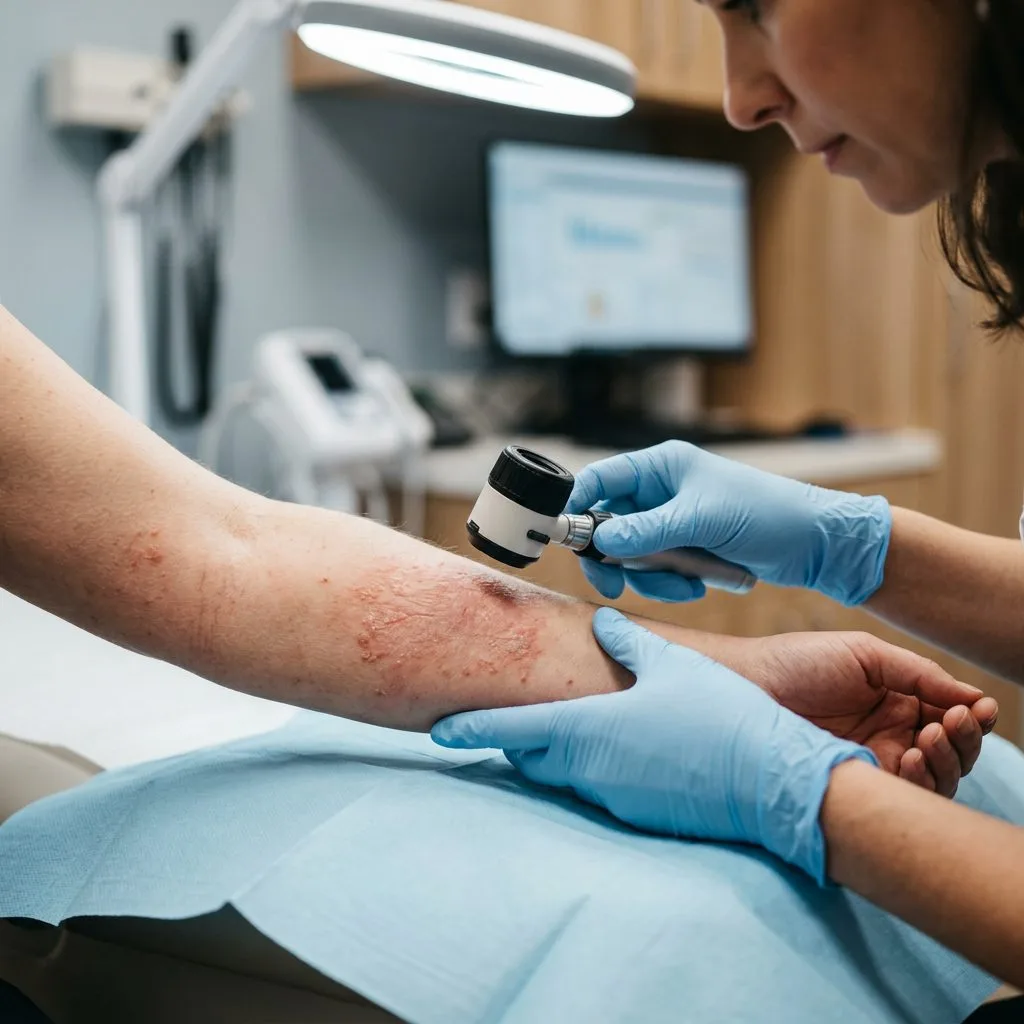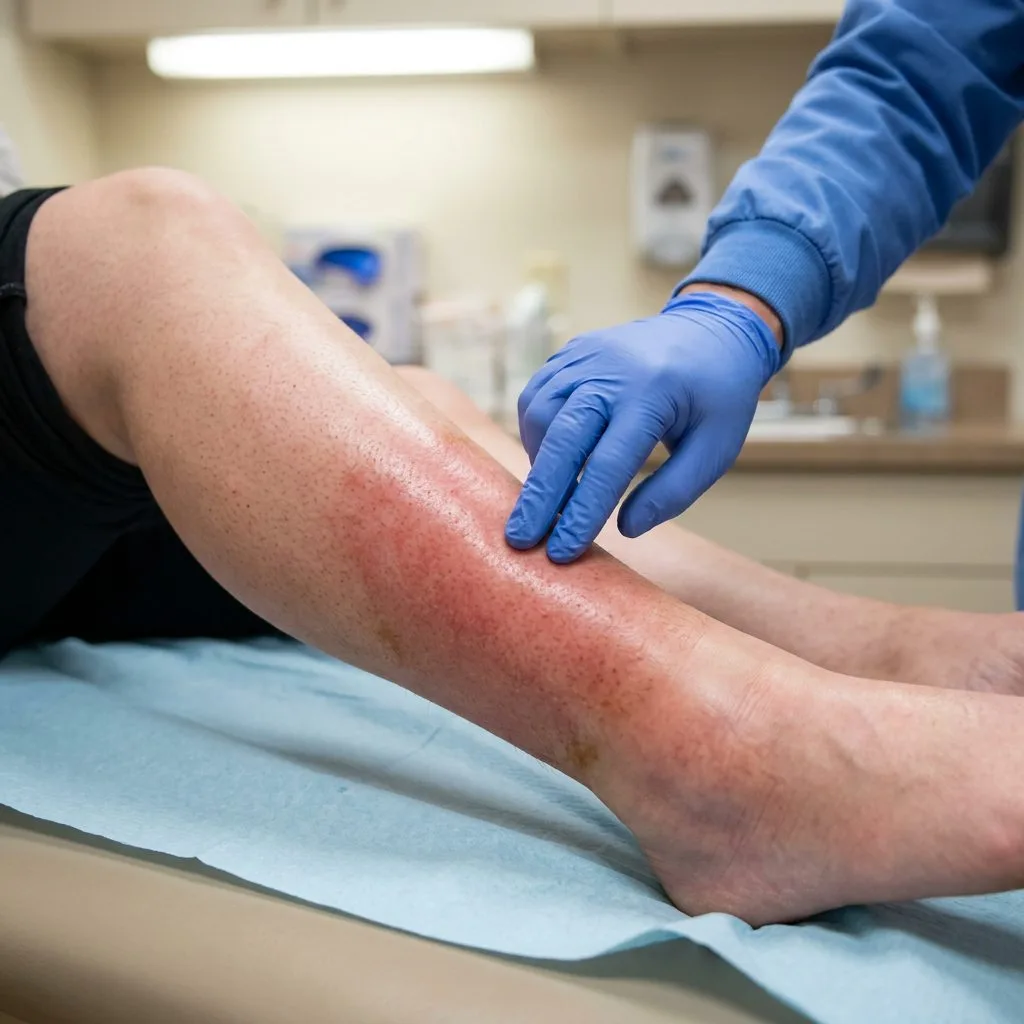
Red, hot, painful skin a few hours after sun exposure is sunburn — UV damage to the skin that peaks at 24 to 48 hours and heals over several days. The most useful steps are cool compresses or a cool shower, generous moisturizer or aloe, an anti-inflammatory like ibuprofen taken early, and drinking extra fluids since burns pull water from the body. Stay out of the sun until it heals. A licensed clinician can review more severe or blistering burns online and prescribe stronger relief when appropriate.
Seek emergency care if: you have extensive blistering, a high fever, severe headache, confusion, fainting, or signs of heat exhaustion or heat stroke — these need emergency care.
See a clinician nowWhat is sunburn?
Sunburn is UV radiation damage to skin — inflammatory response with redness, pain, and sometimes blistering. Affects nearly everyone at some point and significantly raises long-term skin cancer risk.
Mild to moderate sunburns are managed at home. Severe burns with blisters covering large areas, or systemic symptoms (sun poisoning), need evaluation.
Do I have sunburn? Common signs
If most of these describe what you're experiencing, telehealth may be a good next step:
What causes it
UV radiation (sun or tanning beds) damages skin DNA, triggers inflammation. Risk factors: fair skin, near equator, midday sun, water/snow reflection, some medications (doxycycline, retinoids).
Is it contagious?
No.
Every sunburn raises melanoma risk — and there's no such thing as a 'base tan' that protects against future damage.
Can it be treated online?
Routine sunburn is well-suited to telehealth. Extensive blistering, sun poisoning with systemic symptoms, signs of infection — may need in-person care.
How sunburn is treated
Cool compresses, cool baths. NSAIDs (ibuprofen) — best within 24 hours, reduces inflammation. Aloe vera gel — soothing. Hydration generously. Topical steroids (1% hydrocortisone) for severe inflammation. Don't pop blisters. Severe widespread sunburn may need oral steroids.
Self-care while you wait
- Cool compresses and baths
- Aloe vera gel (refrigerated for extra cooling)
- Drink extra water
- Ibuprofen for pain and inflammation
- Avoid further sun until healed
- Don't scrub or peel skin
- Loose soft clothing
- Moisturize as healing
- Sunscreen and protective clothing going forward
How long does it last?
3–7 days; peeling 1–2 weeks later.
Frequently asked questions
Is aloe vera actually effective?
Yes — modest cooling and anti-inflammatory effect. Use plain aloe gel, not with added fragrance/lidocaine.
Should I use Aquaphor or moisturizer?
Once acute phase passes, yes — heals dry skin. Initially focus on cooling, NSAIDs, anti-inflammatory.
Will it scar?
Usually no — heals without scars. Severe blistering rarely scars.
Does cocoa butter help?
Moisturizes during peeling phase but doesn't speed healing.
Why does even short sun exposure burn me?
Fair skin, certain medications (doxycycline, retinoids, NSAIDs), midday sun, high UV index all contribute.