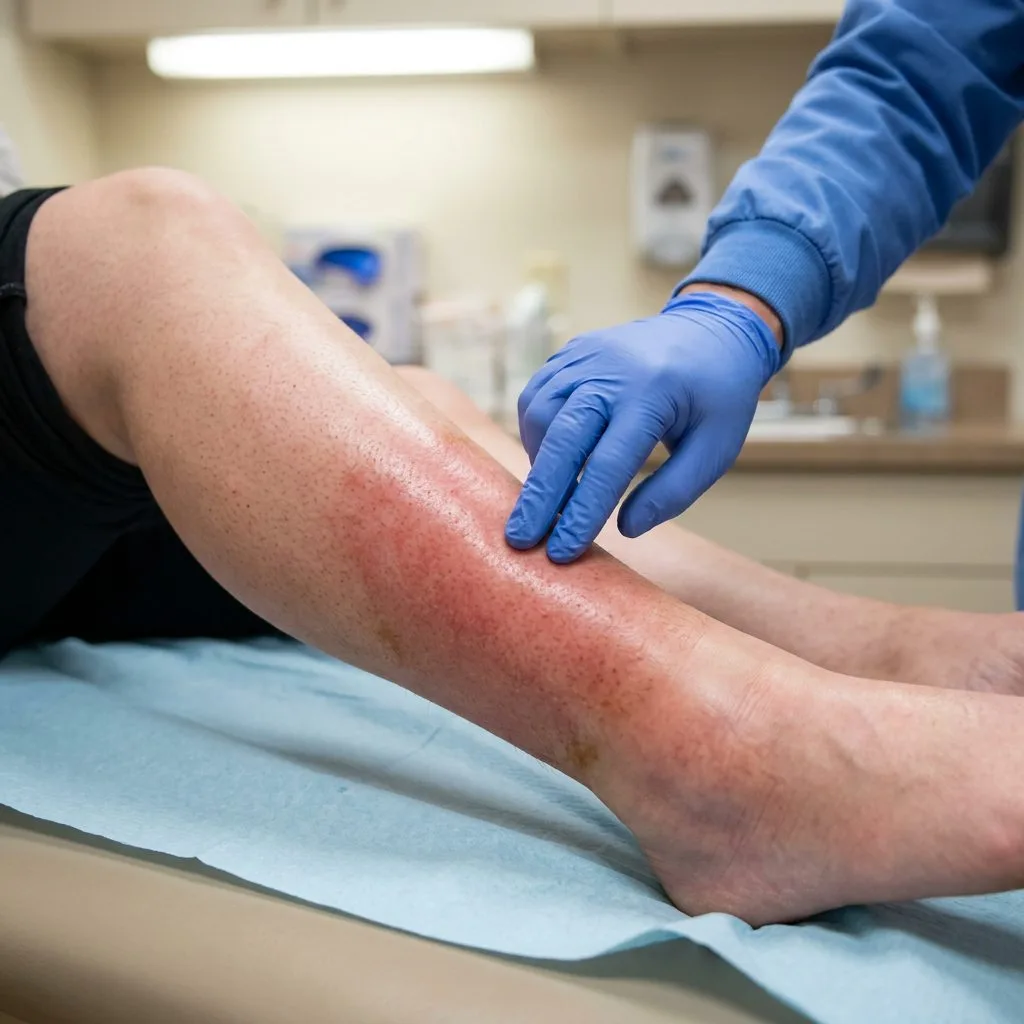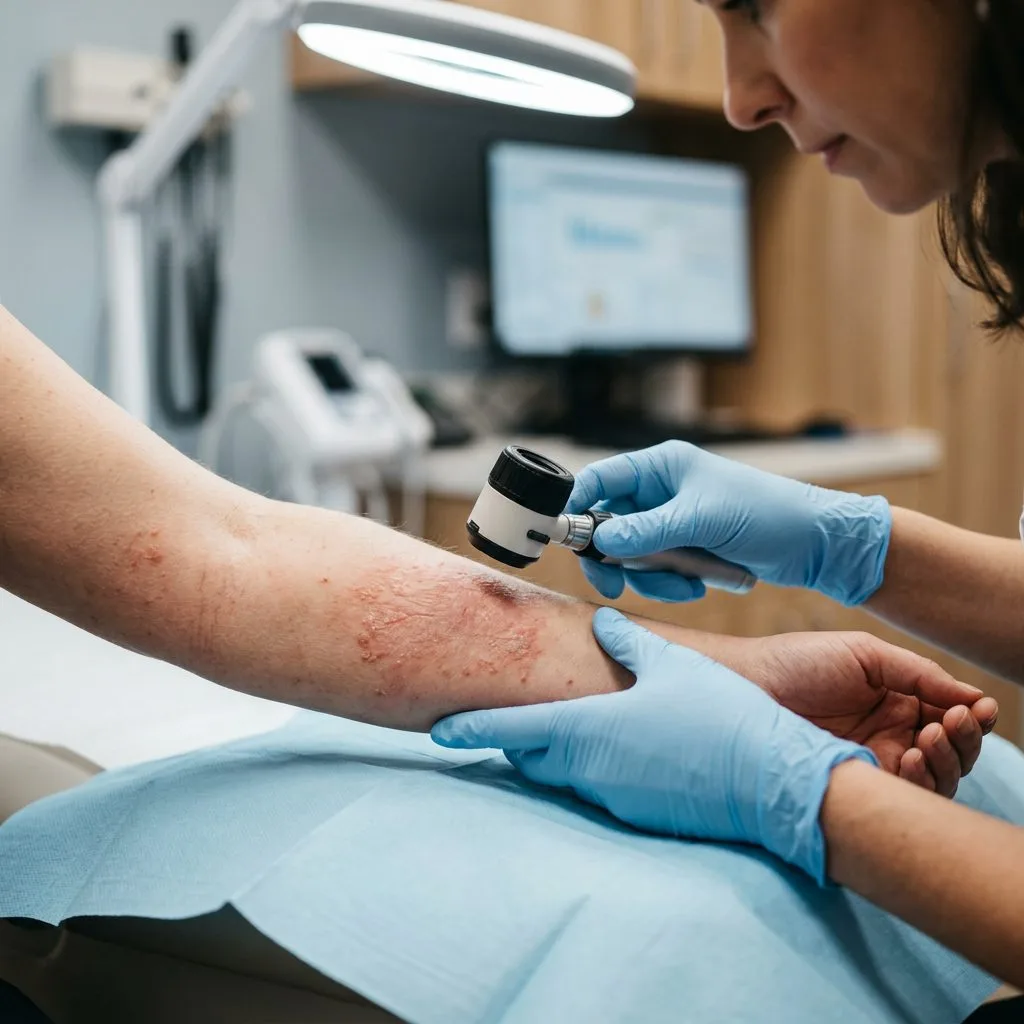
A painful, burning or tingling rash of blisters in a band on one side of your body or face is shingles, a reactivation of the chickenpox virus. This is time-sensitive: the single most useful step is to start a prescription antiviral (valacyclovir, acyclovir, or famciclovir) within 72 hours of the rash appearing, which speeds healing and lowers the risk of lingering nerve pain. A licensed clinician can review photos online and send an antiviral to your pharmacy the same day — don't wait.
Seek emergency care if: the rash is near or on your eye, nose tip, or forehead (it can threaten vision), or you have neurologic symptoms or a rapidly spreading rash — these need urgent in-person care.
See a clinician nowWhat is shingles?
Shingles is a painful rash caused by reactivation of the chickenpox virus (varicella-zoster) that lay dormant in nerve cells after childhood infection. It typically appears as a band of blisters on one side of the body, following a single nerve root.
About 1 in 3 US adults will get shingles in their lifetime, with risk rising sharply after age 50. Early antiviral treatment (within 72 hours) reduces severity and significantly lowers the risk of postherpetic neuralgia — chronic pain that can last months to years.
Do I have shingles? Common signs
If most of these describe what you're experiencing, telehealth may be a good next step:
What causes it
Reactivation of varicella-zoster virus (the chickenpox virus) that's been dormant in nerve cells since childhood infection. Triggers include aging immune system, stress, immunosuppression, and serious illness.
Is it contagious?
Shingles itself isn't transmitted, but the virus in the blisters can give chickenpox to non-immune people through direct contact. Cover the rash. Especially avoid contact with pregnant women who haven't had chickenpox, newborns, and immunocompromised people.
The 72-hour window matters — antivirals started early can mean the difference between a 2-week illness and 6 months of nerve pain.
Can it be treated online?
Suspected shingles is well-suited to telehealth, especially for trunk/limb involvement. Photos confirm the diagnosis in most cases. Eye involvement (any rash near the eye, nose tip, or forehead — ophthalmic zoster) needs urgent in-person care and possible ophthalmology referral.
How shingles is treated
Valacyclovir 1g three times daily for 7 days is most common — best started within 72 hours of rash. Acyclovir and famciclovir are alternatives. Add pain control: acetaminophen, NSAIDs, or gabapentin for nerve pain. Severe pain or complications may need additional management.
Self-care while you wait
- Keep the rash clean and dry
- Cover it to reduce transmission risk
- Cool compresses for comfort
- Calamine lotion can help itch
- Loose clothing
- Avoid scratching
- Rest — your immune system is working
How long does it last?
Acute rash typically clears in 2–4 weeks. About 10–18% develop postherpetic neuralgia — nerve pain lasting months to years, more common with older age and delayed treatment.
Frequently asked questions
Should I get the shingles vaccine?
Yes if you're 50+ — Shingrix (2-dose series) is >90% effective at preventing shingles and even more effective at preventing postherpetic neuralgia.
Can I get shingles more than once?
Yes — about 6% of people have a recurrence. The vaccine helps prevent both first and recurrent episodes.
Is the pain normal?
Acute shingles pain can be intense. If pain persists more than 90 days after rash heals, that's postherpetic neuralgia and needs ongoing treatment.
Is shingles linked to stress?
Yes — stress is a known trigger because it lowers immune surveillance of the dormant virus.
How long until I'm not contagious?
Until all blisters have crusted over — usually 7–10 days.