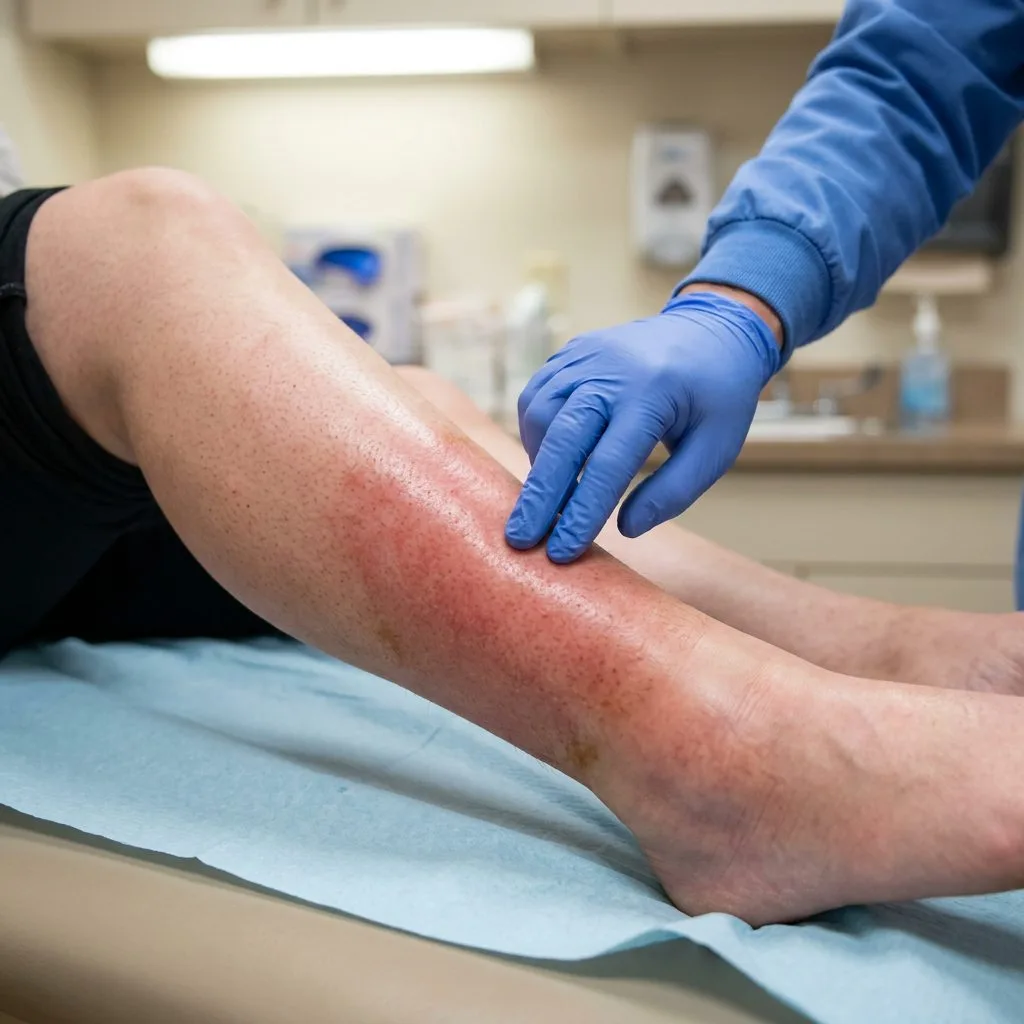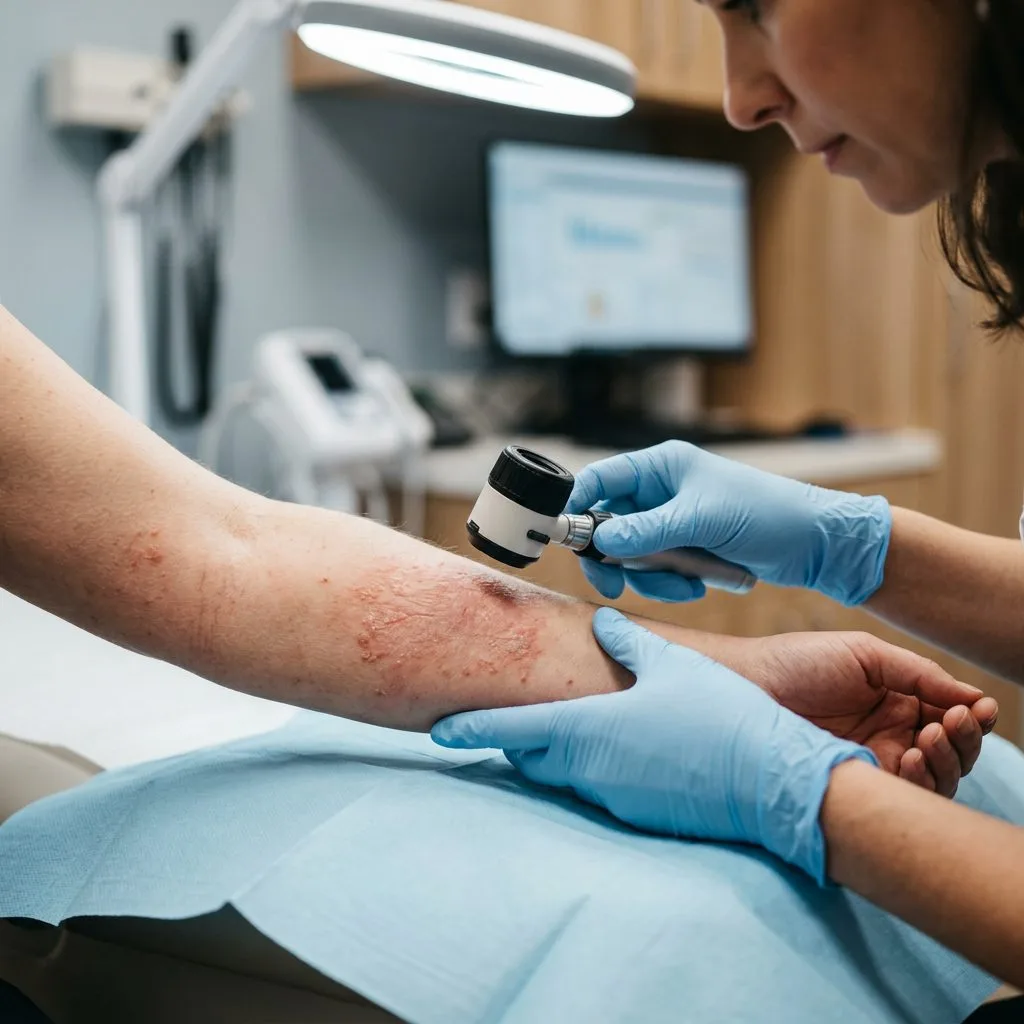
A red, itchy, irritated rash — including eczema flares and contact reactions — is most often caused by inflammation from an irritant, allergen, or dry skin, and usually responds well to topical treatment. The single most useful step is to stop the suspected trigger, moisturize generously, and apply an over-the-counter hydrocortisone cream; for stubborn or widespread flares, a prescription-strength steroid cream works faster. A licensed clinician can review photos of your rash online, identify the likely cause, and send a prescription to your pharmacy the same day.
Seek emergency care if: a rash comes with high fever, painful purple spots that don't fade when pressed, blistering or peeling of large areas, mouth or eye involvement, or trouble breathing — these can signal a serious reaction and need the ER immediately.
See a clinician nowWhat is skin rash and eczema flare?
"Rash" covers a wide range of skin conditions. Common ones evaluable by telehealth include eczema (atopic dermatitis — chronic, itchy, dry, often on flexures), contact dermatitis (reaction to something touching the skin — poison ivy, nickel, fragrance), fungal infections (ringworm, athlete's foot, jock itch), hives (raised wheals that come and go), seborrheic dermatitis (flaky scalp or face), and pityriasis rosea.
Less straightforward via telehealth: rashes that involve mucous membranes, systemic illness, rapidly spreading rashes, or rashes in newborns.
The clinician's job: identify the type, prescribe targeted treatment, and recognize when in-person care is needed.
Do I have skin rash and eczema flare? Common signs
If most of these describe what you're experiencing, telehealth is a reasonable next step:
What causes it
Eczema: genetic skin barrier dysfunction, triggers include dry air, irritants, stress, food in some children. Contact dermatitis: direct exposure to an allergen (poison ivy, nickel, fragrance, latex) or irritant (harsh soap, chemicals). Fungal infections: dermatophyte fungi thriving in warm, moist areas. Hives: allergic, viral, or sometimes from heat/cold/pressure. Seborrheic dermatitis: an inflammatory response to yeast normally found on skin.
Is it contagious?
Depends on the cause. Eczema, contact dermatitis, hives, and seborrheic dermatitis are NOT contagious. Fungal infections ARE contagious through skin contact, shared towels, or floors (gym showers, pools). Bacterial skin infections (impetigo, cellulitis) are contagious — see "skin infection."
A clear photo of a rash is often more informative than an in-person visit.
Can it be treated online?
Rash evaluation is one of telehealth's sweet spots. A clear, well-lit photo (multiple angles, close and zoomed-out) plus your history covers most diagnoses. We may ask for additional photos as the rash evolves. For things requiring biopsy, specialized testing, or in-person assessment of pattern (e.g., extensive psoriasis for systemic therapy decisions), referral to dermatology.
How skin rash and eczema flare is treated
Eczema: emollient moisturizer (CeraVe, Cetaphil, Vanicream) liberally and frequently; topical steroid (hydrocortisone, triamcinolone, etc.) of appropriate potency for the location and severity; antihistamine for itch at night; identify and avoid triggers.
Contact dermatitis: identify and stop the trigger; topical or oral steroid; antihistamine; cool compresses.
Fungal: topical antifungal (clotrimazole, terbinafine) for 2–4 weeks; oral antifungal for extensive or resistant cases.
Hives: identify and avoid trigger; antihistamine (cetirizine, fexofenadine, hydroxyzine at higher dose if needed); rarely oral steroid for severe cases.
Seborrheic dermatitis: antifungal shampoo (ketoconazole, selenium sulfide); topical antifungal cream; sometimes brief topical steroid.
Self-care while you wait
- Moisturize daily, especially after bathing (within 3 minutes)
- Take lukewarm showers — hot water worsens itch and dryness
- Use fragrance-free, dye-free laundry detergent
- Avoid known triggers
- Keep nails short to minimize scratching damage
- Cool compresses for relief
- Cotton clothing rather than wool or synthetics
- Identify and avoid contact allergens
- Manage stress — it triggers eczema and hives
How long does it last?
Contact dermatitis usually resolves within 2–4 weeks after stopping exposure. Hives can be acute (resolving in days) or chronic (months). Eczema is typically chronic with flares — controlled rather than cured. Fungal infections clear within 2–4 weeks of treatment.
Frequently asked questions
Do I need a photo for the visit?
Yes — a clear, well-lit photo is one of the most important parts of telehealth rash evaluation. Take it in natural daylight when possible, multiple angles, and include both close-up and zoomed-out views.
Is over-the-counter hydrocortisone enough?
For mild rashes, OTC 1% hydrocortisone may be enough. Stronger topical steroids (prescription) are often needed for moderate or persistent rashes. Telehealth can match potency to the rash.
Why is my eczema getting worse?
Common triggers include dry air (winter), new soap or detergent, stress, food in some kids, infection of cracked skin, or heat/sweating. We can help identify and address triggers.
Is this poison ivy or something else?
Poison ivy classically has linear streaks of red blisters where the plant touched skin, develops 1–3 days after exposure, and is incredibly itchy. A photo plus your exposure history usually nails the diagnosis.
When do I need a dermatologist?
Rashes not responding to first-line treatment, suspected psoriasis or atopic dermatitis needing systemic therapy, suspicious moles or skin changes, or chronic conditions requiring biopsy or specialized therapy — dermatology referral.