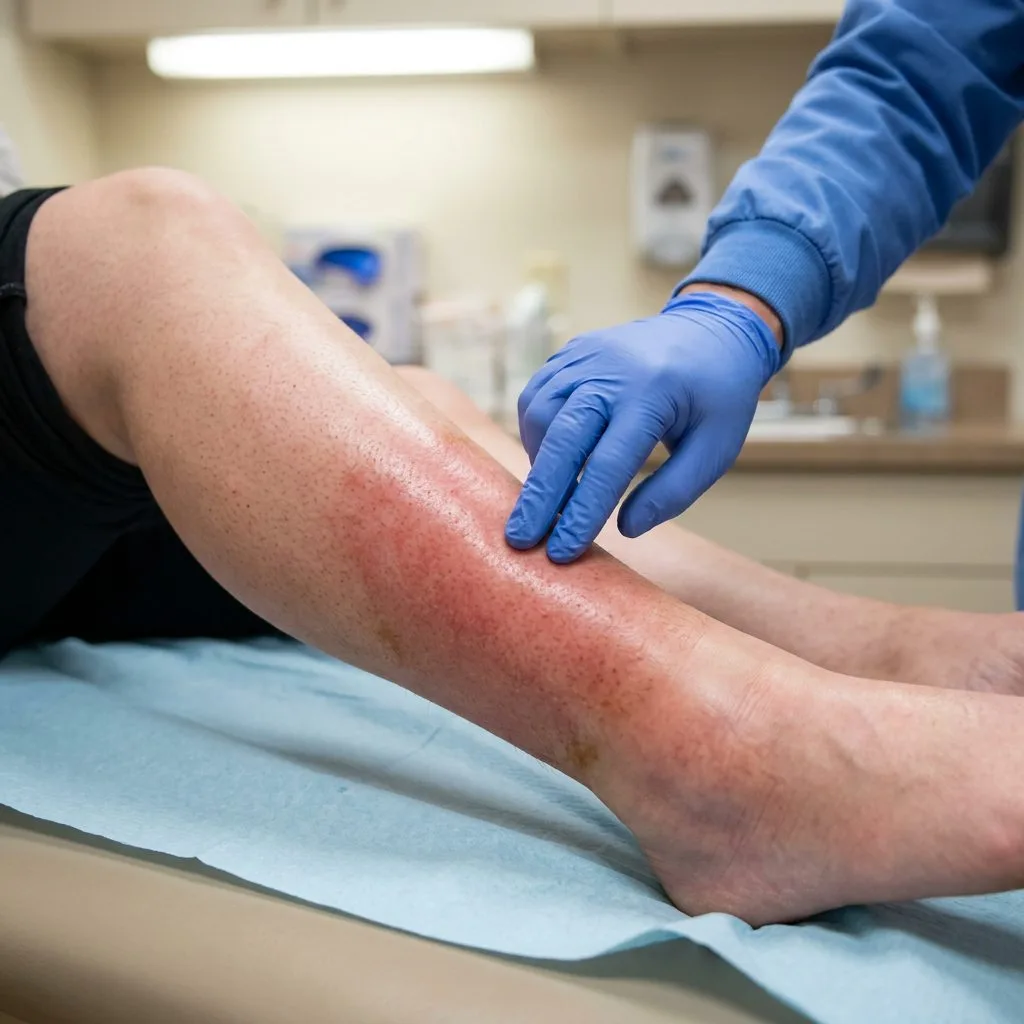
Pain, redness, and swelling along the edge of a toenail — most often the big toe — usually means the nail has grown into the surrounding skin. The most useful first step is to soak the foot in warm water several times a day, keep it clean and dry, and switch to roomy shoes. Many early cases settle with this care. A licensed clinician can review a photo online, prescribe antibiotics if it is infected, and tell you clearly whether the nail edge needs a quick in-office procedure.
Seek emergency care if: the redness is spreading up the foot, you have a fever, or you have diabetes or poor circulation with a foot infection — these need prompt in-person care.
See a clinician nowWhat is an ingrown toenail?
An ingrown toenail (onychocryptosis) happens when the corner or side of a nail grows into the soft skin beside it, causing pain, redness, and swelling. The big toe is by far the most common site. If bacteria get in, the area can become infected, with warmth, throbbing, and pus.
Common causes include cutting nails too short or rounding the corners, tight or narrow shoes, an injury to the toe, sweaty feet, and naturally curved nails. It is one of the most common foot complaints and ranges from a minor nuisance to a painful infection.
Do I have an ingrown toenail? Common signs
If most of these describe what you're experiencing, an online evaluation is a reasonable next step:
What to do right now
- Soak the foot in warm (not hot) water for 15–20 minutes, 3–4 times a day
- Keep the foot clean and thoroughly dry between soaks
- Wear open-toed or roomy shoes; avoid tight, narrow footwear
- Take an over-the-counter pain reliever such as acetaminophen or ibuprofen
- Do not dig under the nail, cut a notch in it, or cut it too short
- Take a clear, well-lit photo so a clinician can assess for infection
How an online clinician can help
Telehealth is well-suited to the early and infected stages. A clinician reviews your photo and history, confirms it is an ingrown toenail, coaches you on soaking and footwear, and prescribes an oral antibiotic if there are clear signs of infection. They will also tell you plainly when the nail edge needs to be trimmed or partially removed.
Telehealth cannot perform the procedure itself. A partial nail avulsion — numbing the toe and removing the offending nail edge — is a quick in-office procedure done by a clinician or podiatrist, and is often the most reliable fix for severe or recurrent cases. People with diabetes, neuropathy, or poor circulation should be evaluated in person promptly.
Most early ingrown toenails calm down with warm soaks and roomy shoes — but a deeply embedded or recurring nail edge usually needs a quick in-office trim.
How an ingrown toenail is treated
Mild cases are managed with warm soaks, good foot hygiene, roomy footwear, and pain relief. When infected, a clinician may prescribe an oral antibiotic that covers skin bacteria. For severe, persistent, or recurrent ingrown toenails, an in-office partial nail removal under local anesthetic addresses the root of the problem. Proper nail cutting — straight across, not too short — helps prevent recurrence.
How long does it last?
An early ingrown toenail treated with soaks and footwear changes often improves within a week or two. An infected toe usually improves within a few days of starting antibiotics. If the nail keeps growing into the skin, definitive relief usually requires a partial nail removal.
Frequently asked questions
How do I treat an ingrown toenail at home?
Soak the foot in warm water several times a day, keep it clean and dry, wear roomy shoes, and take an over-the-counter pain reliever. Avoid digging under the nail or cutting it too short. Many early cases improve with this care.
Is my ingrown toenail infected?
Signs of infection include increasing redness, warmth, swelling, throbbing pain, and pus drainage. If these are present, a clinician can prescribe antibiotics and decide whether the nail edge needs to be removed in person.
Can an ingrown toenail be treated online?
Yes for evaluation and infection. A clinician can review a photo, guide soaking and footwear, and prescribe oral antibiotics if needed. A nail edge that must be trimmed or removed is a quick in-office procedure.
When does an ingrown toenail need a procedure?
If pain is severe, the nail keeps growing into the skin, there is overgrown tissue, or it recurs, a clinician or podiatrist can perform a partial nail removal under local anesthetic. This is often the most reliable long-term fix.
Why do people with diabetes need extra caution?
Diabetes and poor circulation raise the risk that a small foot infection becomes serious. If you have diabetes, neuropathy, or peripheral artery disease, have an ingrown toenail evaluated promptly rather than treating it at home.