Red sores that ooze and crust over with a honey-colored scab — often around the nose and mouth, most commonly in children — are impetigo, a contagious bacterial skin infection. Unlike fungal rashes, impetigo needs antibiotics to clear: usually a prescription antibiotic ointment (mupirocin) for limited spots, or oral antibiotics if it's more widespread. The most useful step is to gently clean the area, keep it covered, and get treated to stop it spreading. A licensed clinician can confirm it from photos online and send a prescription to your pharmacy the same day.
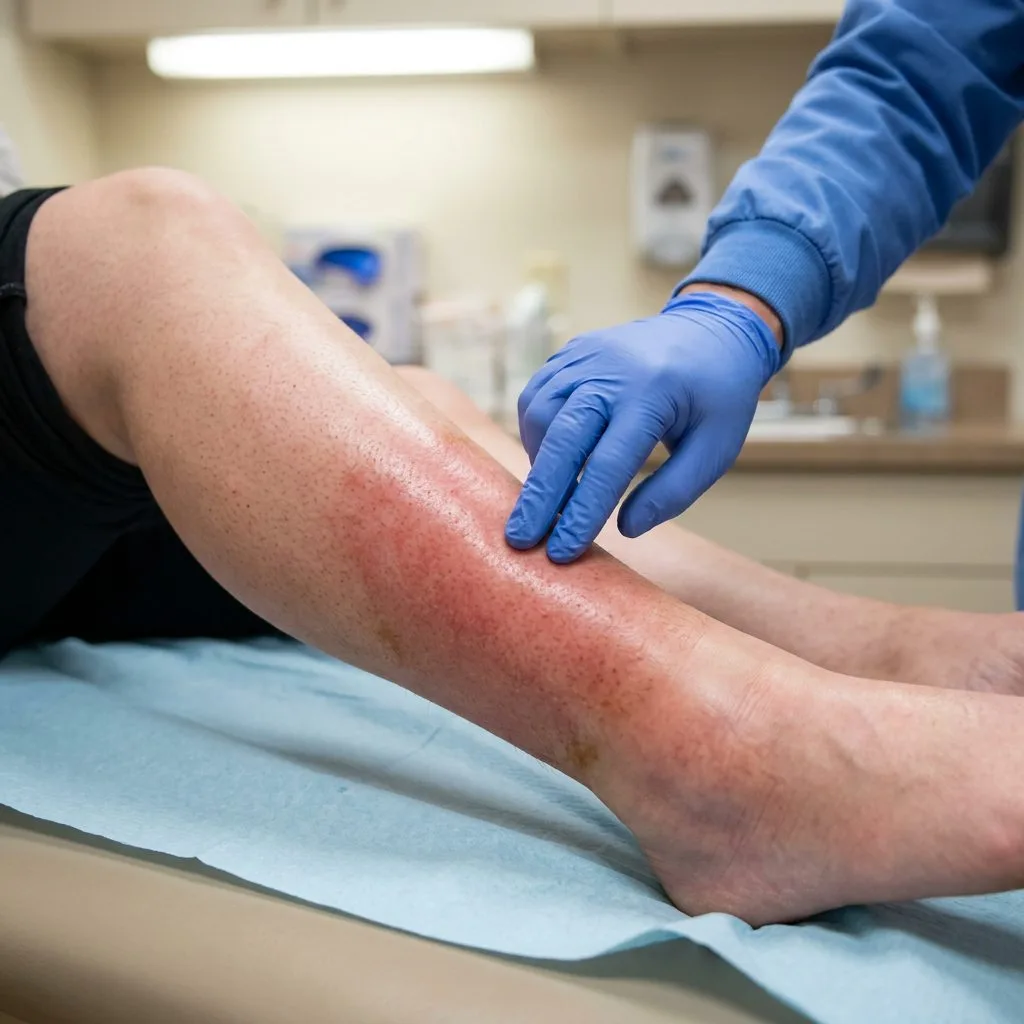
Seek emergency care if: you have spreading red streaks, fever, severe pain, or a large area involved — this can signal cellulitis or a deeper infection. Newborns with impetigo need urgent in-person care.
See a clinician nowWhat is impetigo?
Impetigo is a common superficial bacterial skin infection — usually Staph aureus, sometimes Strep. Most common in young children but can affect anyone, especially with warm weather, minor skin injuries, or eczema.
Classic feature: honey-colored crusted sores, often on face, hands, or extremities. Easily treated with topical or oral antibiotics.
Do I have impetigo? Common signs
If most of these describe what you're experiencing, telehealth may be a good next step:
What causes it
Staph aureus (most common), Streptococcus pyogenes. Bacteria enter through minor breaks in skin — cuts, insect bites, eczema. Warm humid conditions favor spread.
Is it contagious?
Yes — direct contact or via contaminated items.
Honey-crusted sores around the nose and mouth in a kid — almost always impetigo. Mupirocin handles most cases.
Can it be treated online?
Impetigo is well-suited to telehealth — diagnosis from photos. Widespread cases, deep involvement (ecthyma), bullous impetigo in infants, or systemic symptoms need in-person care.
How impetigo is treated
Topical mupirocin (Bactroban) ointment 3x daily for 5 days — first-line for limited impetigo. Retapamulin alternative. Oral antibiotics for widespread cases: cephalexin, dicloxacillin, or clindamycin if MRSA concern.
Self-care while you wait
- Gentle washing with soap and water
- Cover lesions with non-stick bandages
- Wash hands frequently
- Trim fingernails to limit scratching damage
- Don't share towels, washcloths, clothing
- Wash linens/towels in hot water
- Treat insect bites and eczema to prevent recurrence
How long does it last?
Most clear in 5–10 days with treatment.
Frequently asked questions
Can my kid go to school?
After 24 hours of antibiotic treatment, with lesions covered, most schools allow return.
Will it scar?
Usually no — impetigo affects superficial skin only. Some hyperpigmentation possible.
Why does it keep coming back?
Carrier state (nasal Staph) drives recurrence. Sometimes treated with mupirocin in the nostrils.
Can adults get it?
Yes — especially with eczema, athletes (mat sports), or in close-contact settings.
Is it the same as MRSA?
Some cases are MRSA, especially if not responding to standard antibiotics. Culture helps target treatment.