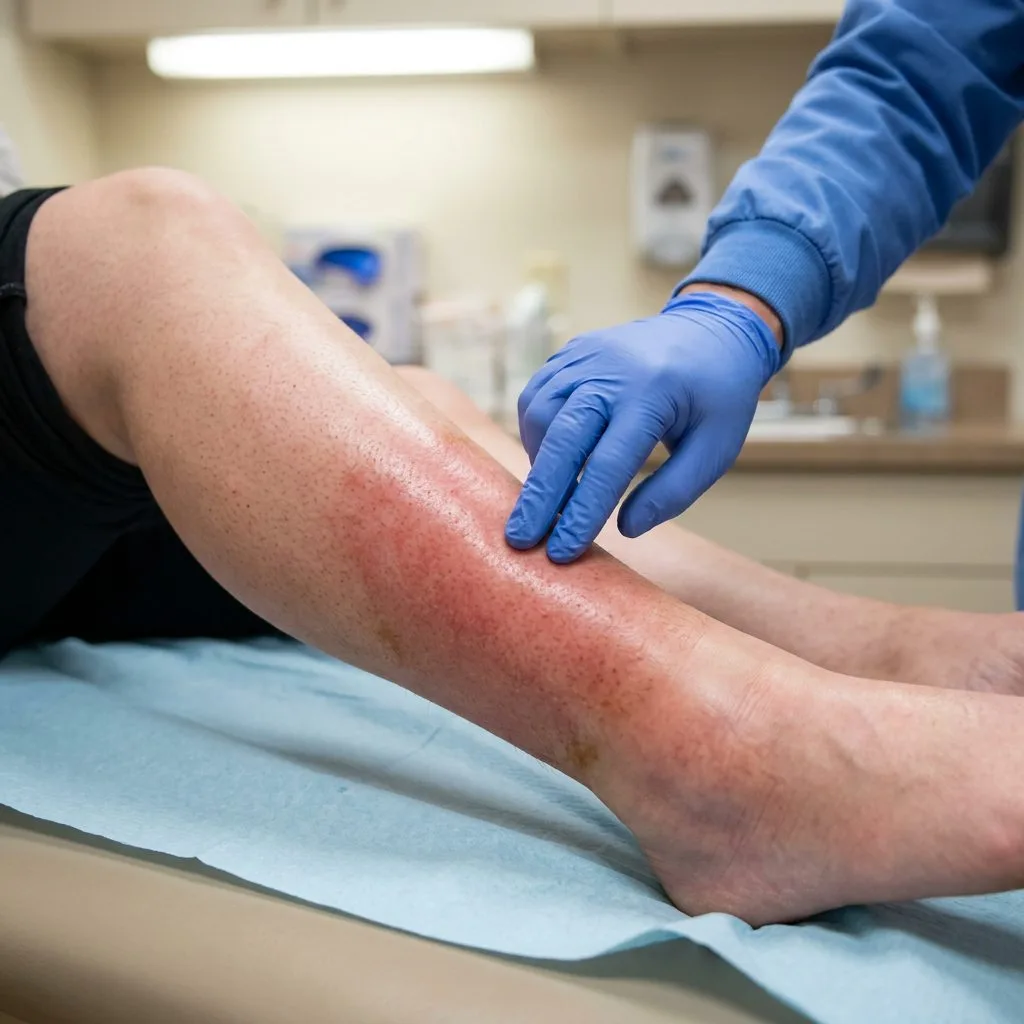
Clusters of small red bumps or pus-topped pimples centered on hair follicles — especially after shaving, heavy sweating, friction, or a hot tub — are usually folliculitis. The most useful first step is to stop the trigger (pause shaving the area) and apply a warm, moist compress a few times a day. Many cases clear on their own within a week. A licensed clinician can review a clear photo online and prescribe an antibacterial wash, topical antibiotic, or short oral course when it is bacterial or not improving.
Seek emergency care if: the area becomes a large painful lump, the redness spreads quickly, you develop a fever, or a red streak runs from the rash — these point to a deeper infection that needs urgent in-person care.
See a clinician nowWhat is folliculitis?
Folliculitis is inflammation or infection of the hair follicles. It shows up as small red bumps or white-tipped pimples, often with a hair visible at the center. It is very common and usually mild. The most frequent bacterial cause is Staphylococcus aureus, but folliculitis can also be caused by friction, occlusion, shaving (razor bumps), yeast (Malassezia/Pityrosporum folliculitis), or Pseudomonas from a poorly maintained hot tub.
Common locations include the beard area, scalp, chest, back, buttocks, and thighs — anywhere hair, sweat, and friction combine.
Do I have folliculitis? Common signs
If most of these describe what you're experiencing, an online evaluation is a reasonable next step:
What to do right now
- Stop shaving, waxing, or plucking the affected area until it settles
- Apply a warm, moist compress for 10–15 minutes a few times a day
- Wash gently with an antibacterial cleanser and pat dry
- Wear loose, breathable clothing and avoid heavy occlusive products
- Don't pick or squeeze the bumps
- Take a clear, well-lit photo so a clinician can assess the type and extent
How an online clinician can help
Folliculitis is well-suited to telehealth. A clinician reviews your photo and history, distinguishes folliculitis from acne and other rashes, identifies likely triggers, and prescribes the appropriate treatment — an antibacterial wash, a topical antibiotic, an oral antibiotic for spreading bacterial folliculitis, or an antifungal for yeast-driven cases. They will also give you targeted advice on shaving technique to prevent recurrence.
Telehealth is not the right path for: a single large, fluctuant, very painful lump (more likely a boil or abscess needing drainage), folliculitis with fever or rapidly spreading redness, or deep, scarring, recurrent disease that needs in-person dermatology.
Most folliculitis is mild and self-limited — the fastest fix is often just stopping the trigger and letting the skin recover.
How folliculitis is treated
Mild superficial folliculitis often resolves with warm compresses and gentle antibacterial cleansing. Bacterial cases may be treated with a topical antibiotic such as clindamycin or mupirocin, or an oral antibiotic when widespread. Hot-tub (Pseudomonas) folliculitis usually clears on its own. Fungal (Malassezia) folliculitis responds to topical or oral antifungals rather than antibiotics — which is why getting the type right matters.
How long does it last?
Mild folliculitis often improves within a week of stopping the trigger and starting basic care. Bacterial or fungal cases that need a prescription usually clear over 1–2 weeks of treatment. If bumps keep coming back, an evaluation can sort out whether it is shaving-related, fungal, or something else.
Frequently asked questions
What is the difference between folliculitis and acne?
Both cause small bumps, but folliculitis centers on a hair follicle (often with a visible hair) and is usually triggered by infection, friction, or shaving, while acne involves clogged oil glands. A clinician can tell them apart from a photo and history.
Does folliculitis need antibiotics?
Many mild cases clear with warm compresses, gentle cleansing, and stopping the trigger. Bacterial folliculitis that is spreading or not improving may need a topical or oral antibiotic, which a clinician can prescribe.
What is hot-tub folliculitis?
It is an itchy, bumpy rash caused by Pseudomonas bacteria from inadequately treated hot tubs, appearing 1–3 days after exposure. It usually clears on its own within 1–2 weeks, but persistent cases should be evaluated.
Can folliculitis be treated online?
Yes. A clinician can review a photo and history, confirm the type, recommend home care or antibacterial washes, and prescribe a topical or oral antibiotic or antifungal when appropriate. Deep or recurrent cases are referred in person.
How do I prevent razor bumps and shaving folliculitis?
Shave less often, use a clean sharp blade and shaving gel, shave in the direction of hair growth, avoid stretching the skin tightly, and consider an electric razor. Pausing shaving for a week or two often lets the area settle.