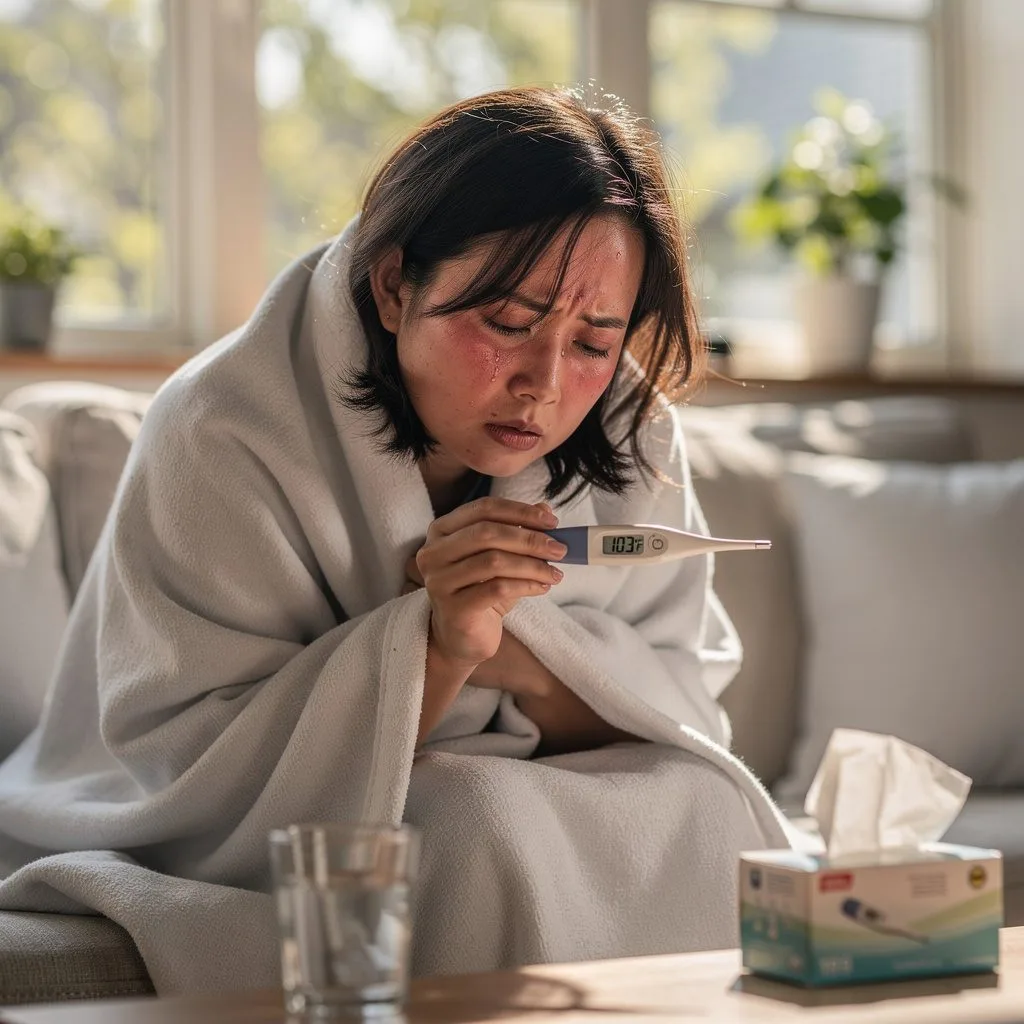
A fever in an adult (a temperature of 100.4°F / 38°C or higher) is your body fighting an infection, most often a self-limited virus. The most useful step is supportive care: rest, plenty of fluids, and acetaminophen or ibuprofen to bring the temperature down and ease the aches — the goal is comfort, not a "normal" number. What matters more than the number is how you feel and any other symptoms. A licensed clinician can review what's likely causing it online and send a prescription to your pharmacy the same day if a treatable cause is found.
Seek emergency care if: your fever is above 103°F and not responding to medication, or you have a stiff neck with confusion, trouble breathing, chest or severe abdominal pain, a non-blanching purple rash, or persistent vomiting — go to the ER.
See a clinician nowWhat is fever in adults?
Fever is a body temperature above 100.4°F (38°C) — your immune system's response to infection or, less commonly, inflammation, drug reactions, or other processes. It's a sign, not an illness; the goal is identifying what's causing it.
In healthy adults, fever from viral illness (cold, flu, COVID, viral GI bug) is usually self-limited and improves with rest, fluids, and time. Bacterial infections often need antibiotics. Other causes — drug fever, autoimmune flares, less common infections — need workup.
Fever itself is generally not dangerous in adults until it gets very high (over 105°F). The danger is what's causing it. Most adults handle fever fine with supportive care while addressing the underlying cause.
Do I have fever in adults? Common signs
If most of these describe what you're experiencing, telehealth is a reasonable next step:
What causes it
Viral infections (flu, COVID, cold, GI virus, mononucleosis, etc.) are the most common cause of adult fever. Bacterial infections include UTI, sinusitis, strep, cellulitis, pneumonia. Less common: drug fever, autoimmune flares, blood clots, post-vaccination fever, heat exhaustion, certain cancers (rare presenting symptom). The history and other symptoms guide the workup.
Is it contagious?
The fever itself isn't contagious, but most underlying infectious causes are. Standard precautions during illness — stay home, hand hygiene, masking around vulnerable people — reduce spread.
Fever is a symptom, not a diagnosis — the question is always: what's causing it?
Can it be treated online?
Telehealth excels at fever triage. A clinician asks about onset, height of fever, other symptoms (the most important clue), exposures, travel, immunization status, and red flags. The job is usually distinguishing "viral illness, support at home" from "needs antibiotics" from "needs in-person workup" from "go to ER." Most adult fevers fall into the first category.
How fever in adults is treated
Symptom relief: acetaminophen 500–1000 mg every 6 hours OR ibuprofen 400–600 mg every 6 hours (with food). Alternating between them can be effective for higher fevers. Lukewarm sponge baths if very high.
Treat the cause: antibiotics if bacterial, antivirals if flu/COVID and within window, supportive care if viral, etc.
Stay hydrated: fever increases fluid loss. Aim for clear urine. Electrolyte drinks help if GI losses involved.
Self-care while you wait
- Rest
- Drink plenty of fluids — water, broth, electrolyte drinks
- Dress lightly so heat can escape
- Cool environment
- Take acetaminophen or ibuprofen for comfort
- Track your temperature and symptoms
- Stay home and avoid spreading whatever you have
How long does it last?
Viral fevers typically last 3–5 days. Bacterial fevers usually break within 24–48 hours of starting the right antibiotic. Fevers lasting longer than 7 days, or recurring patterns, warrant in-person workup.
Frequently asked questions
When is a fever an emergency?
Temperature over 103°F not responding to medication, neck stiffness with severe headache, breathing difficulty, persistent confusion, severe abdominal pain, fever after travel to malaria areas, fever with non-blanching rash, fever in pregnancy or immunocompromised states — these need ER evaluation.
Should I "feed a cold, starve a fever"?
No — that's a myth. Eat what you can stomach, drink plenty of fluids regardless. Adequate calories and hydration help recovery.
Can I exercise with a fever?
No — rest while febrile. Exercise during active infection can worsen illness and rarely contribute to myocarditis (heart inflammation), especially with viral infections. Resume gradually after fever resolves.
Why does my fever come back at night?
Many infectious fevers follow a diurnal pattern — lower in the morning, higher in the evening. This is normal and doesn't change management.
Should I sweat out a fever?
No — overheating yourself isn't medicinal and can be dangerous. Stay cool and comfortable. Sweating happens naturally as fever breaks.