What is minor cuts, burns, and wounds?
Minor cuts, scrapes (abrasions), and burns are everyday injuries that usually heal well with proper care at home. The questions are: how severe is it, does it need professional intervention (stitches, debridement, tetanus shot, burn unit), and how do I keep it from getting infected?
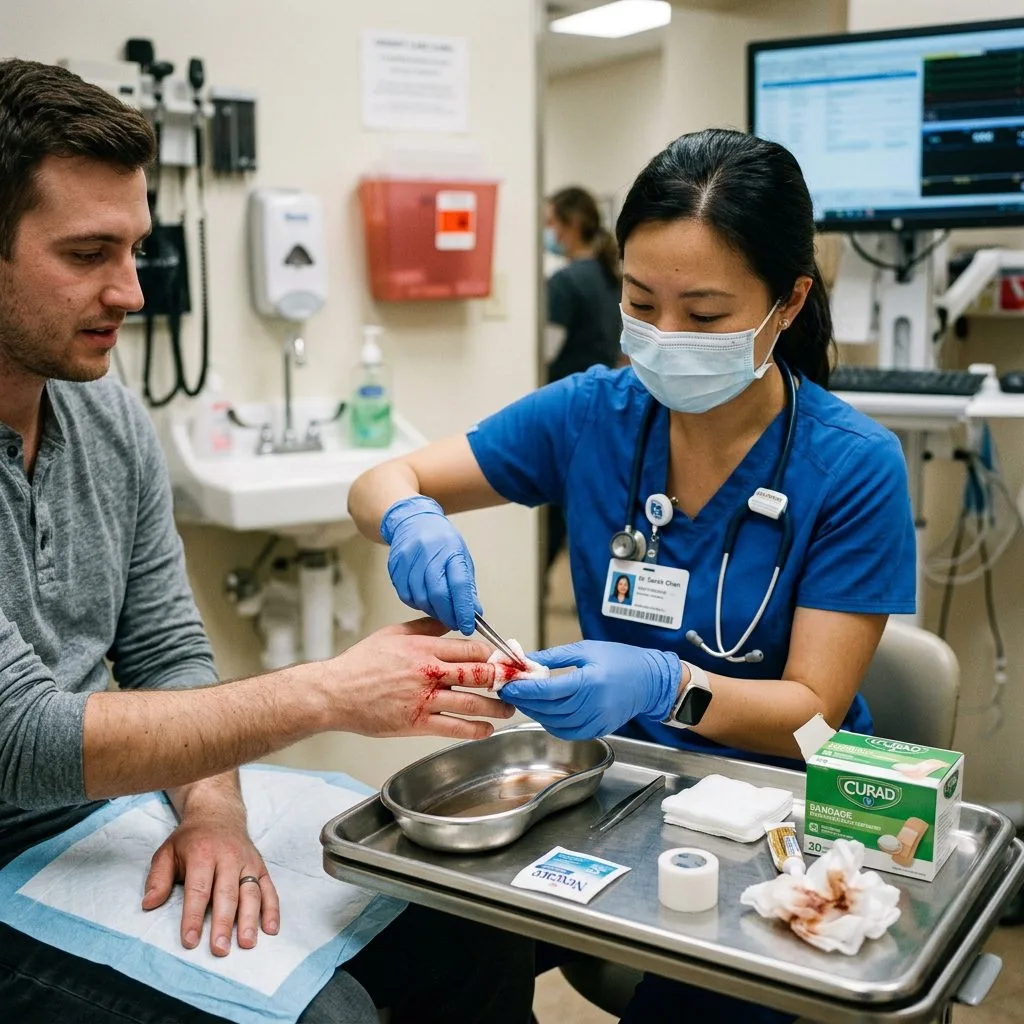
Cuts: lacerations from sharp objects. Generally need stitches or glue if they're deep, gaping, longer than half an inch on the face or three-quarters of an inch elsewhere, won't stop bleeding with pressure, or involve a joint.
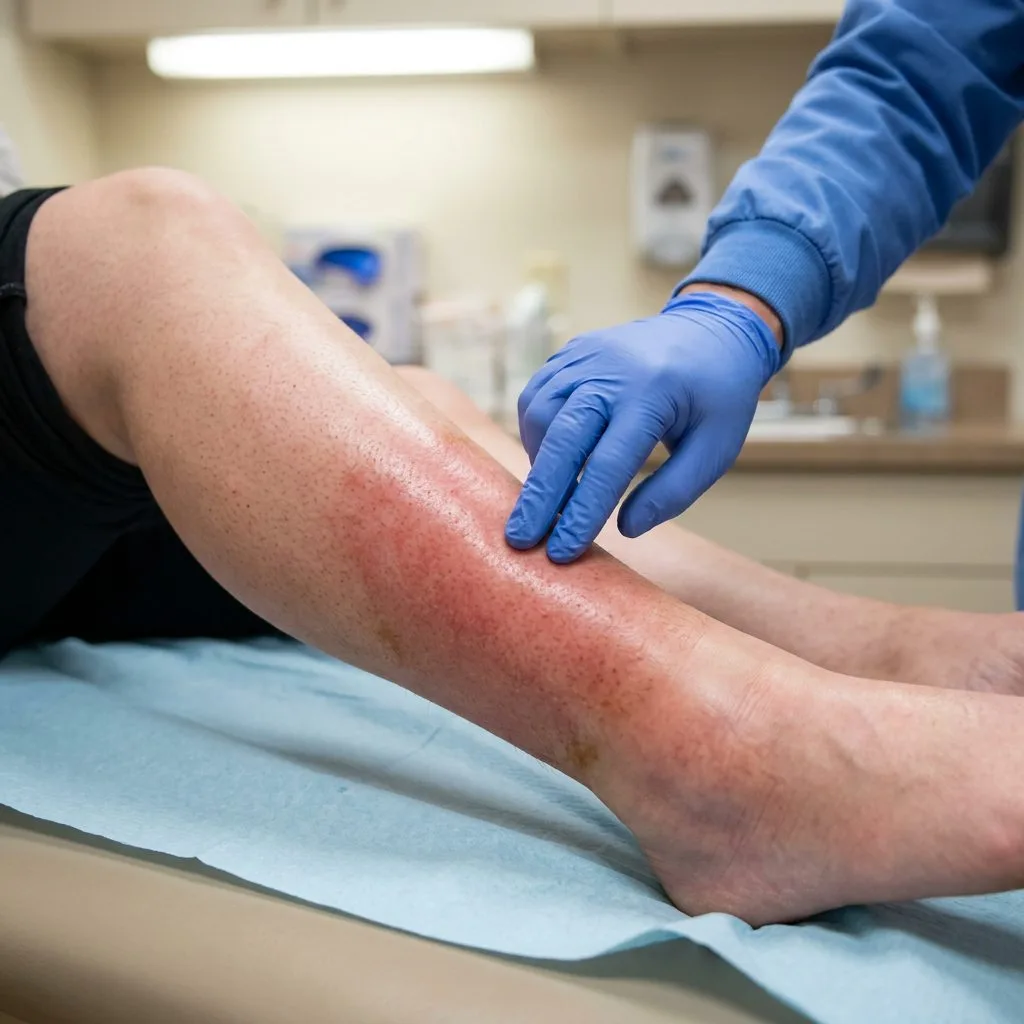
Burns: classified by depth. First-degree (sunburn-like — red, painful, no blisters) heal in days. Second-degree (blistered, very painful) need careful care. Third-degree (white, charred, painless because nerves are destroyed) need ER care immediately.
Abrasions: surface scrapes; clean and dress.
Do I have minor cuts, burns, and wounds? Common signs
If most of these describe what you're experiencing, telehealth is a reasonable next step:
What causes it
Mechanical injury from sharp objects (cuts), abrasive surfaces (scrapes), heat (burns from cooking, scalding water, exhaust), cold (frostbite), chemicals, or electricity. Risk for infection rises with contamination (dirt, rust, animal bites), delay in cleaning, and host factors like diabetes or immune compromise.
Is it contagious?
Wounds themselves aren't contagious, but they can become infected — bacteria spread by inadequate hand hygiene during care, shared towels, or contamination of the wound itself.
A clean wound and the right dressing prevent infection — more than any antibiotic ointment.
Can it be treated online?
Telehealth is great for triage and care guidance for minor wounds. A clear photo, your description of how it happened, and assessment of bleeding/depth/location lets a clinician advise on cleaning, dressing, antibiotic ointment, pain control, and whether you need ER or in-person evaluation. We refer for stitches, deep wounds, possible foreign bodies, and burns over significant body surface area or in critical areas.
How minor cuts, burns, and wounds is treated
Cuts and scrapes: rinse with clean water (tap is fine); gentle soap around but not in the wound; apply pressure to stop bleeding (10 minutes of firm pressure usually does it); apply petrolatum or antibiotic ointment; cover with a clean bandage; change daily.
First-degree burns: cool running water for 10–15 minutes; aloe vera or moisturizer; ibuprofen or acetaminophen for pain; don't apply ice or butter or toothpaste.
Second-degree burns: same as above, but more careful dressing — non-stick dressing changed daily; don't pop blisters unless they're very large; topical bacitracin or silver sulfadiazine for prescription cases.
If signs of infection appear (increasing redness, pus, fever, red streaks), prescription antibiotics.
Self-care while you wait
- Clean with running water — soap and hydrogen peroxide can damage healing tissue
- Apply antibiotic ointment or petrolatum to keep moist
- Cover with a clean bandage; change daily or when wet
- Don't pick scabs
- Watch for redness spreading, increasing pain, pus, or fever
- Update tetanus if you haven't had one in 10 years (5 years for dirty wounds)
- For burns: cool water (not ice), then moisturize and dress
- Eat well and stay hydrated to support healing
How long does it last?
Minor cuts and scrapes heal in 1–3 weeks. Sutured cuts heal in similar time; stitches come out in 5–14 days depending on location. First-degree burns heal in days; second-degree burns take 2–3 weeks. Healing can be slower in older adults, smokers, diabetics, and those with poor circulation.
Frequently asked questions
How do I know if a cut needs stitches?
Generally needs stitches: deep enough to see fat or muscle, gaping (you can't bring the edges together easily), longer than 1/2 inch on face or 3/4 inch elsewhere, bleeding that won't stop with 15 minutes of pressure, over a joint, or won't stay closed. Send us a photo if unsure.
Should I use hydrogen peroxide or alcohol?
No — these damage healing tissue. Clean with running water and gentle soap around the wound. Petrolatum or antibiotic ointment to keep moist.
Do I need antibiotic ointment?
For minor clean wounds, petrolatum works as well as antibiotic ointment. Triple antibiotic ointment (neomycin) causes contact dermatitis in some people. Polysporin or plain petrolatum are safer choices.
When do I need a tetanus shot?
If you haven't had a tetanus shot in 10 years for a clean wound, or 5 years for a dirty/contaminated wound. Most adults are due for a tetanus booster around their primary care annual.
How do I treat a sunburn?
Cool compresses, aloe vera, lots of fluids, ibuprofen or acetaminophen for pain, don't pop blisters. Severe sunburn (extensive blisters, fever, dehydration) needs evaluation.