What is acute back pain?
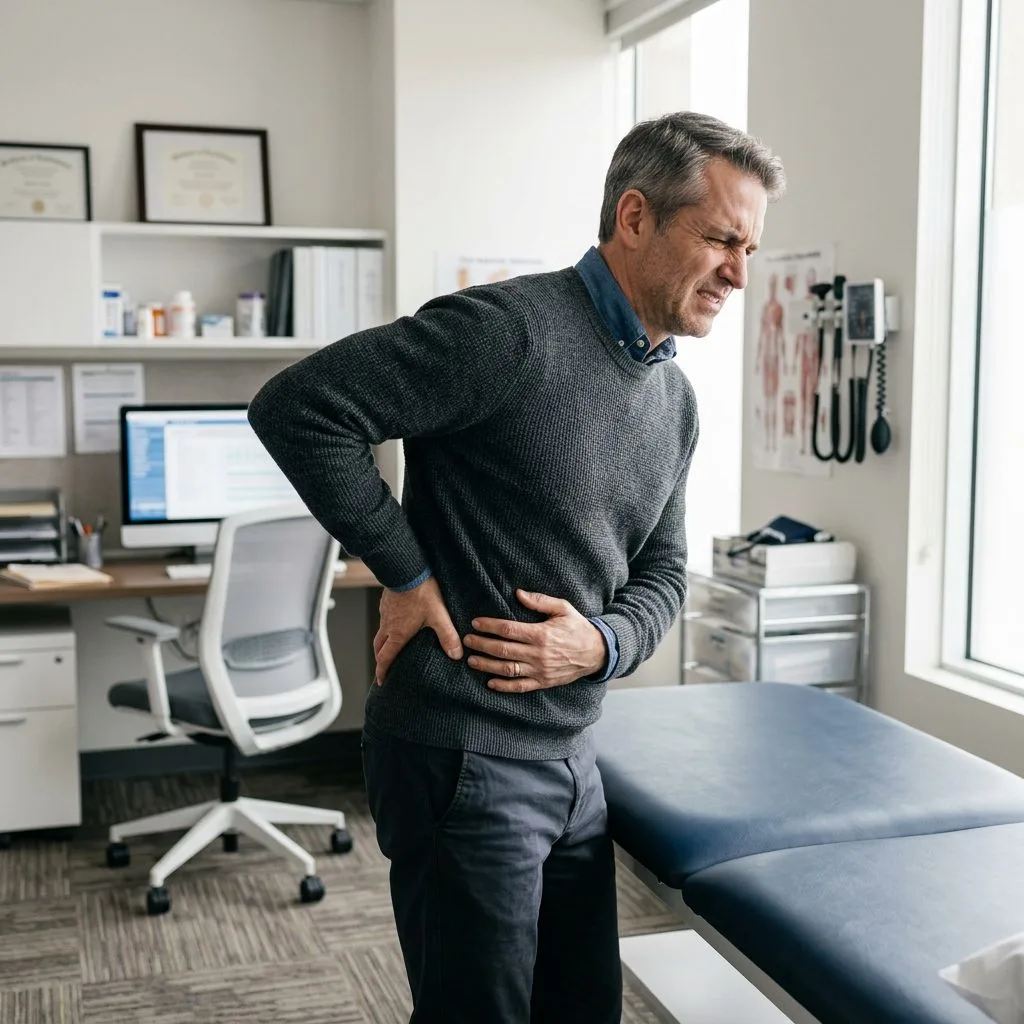
Acute mechanical low back pain is one of the most common reasons for medical visits. The good news: about 90% of acute back pain (lasting less than 6 weeks) is mechanical — from muscle, ligament, disc, or joint — and resolves within weeks with conservative care.
The rare bad cases — "red flag" presentations — include cauda equina syndrome (loss of bowel/bladder control, saddle numbness), spinal infection or tumor (history of cancer, IV drug use, immune suppression, weight loss, fevers), fracture (significant trauma, osteoporosis, prolonged steroid use), or progressive neurological deficits. These need urgent imaging and in-person care.
Most everything else is managed conservatively. Modern evidence strongly supports staying active (within pain tolerance) over bed rest.
Do I have acute back pain? Common signs
If most of these describe what you're experiencing, telehealth is a reasonable next step:
What causes it
Most acute back pain comes from a strain or sprain of muscles or ligaments — often from lifting something wrong, sudden movement, or accumulated load. Disc herniation can cause back pain with radiation down the leg (sciatica). Less commonly, kidney stones can mimic back pain (with classic flank distribution and urinary symptoms). Spinal stenosis or facet joint arthritis are typically chronic.
Is it contagious?
No.
Stay moving — bed rest worsens acute back pain. Within reason, normal activity is medicine.
Can it be treated online?
Telehealth is well-suited to acute uncomplicated back pain. A clinician walks through the history, screens for red flags, assesses severity, recommends initial management (medications, activity guidance, when to follow up), and refers in-person when indicated.
Red flags requiring in-person evaluation: numbness in the groin/saddle area, loss of bowel or bladder control, progressive leg weakness, fever, history of cancer, significant trauma, IV drug use, recent steroid use, or pain at night/at rest unrelieved by position.
How acute back pain is treated
NSAIDs: ibuprofen 400–600 mg every 6 hours (with food) or naproxen 220–440 mg every 12 hours — first-line for most acute back pain.
Muscle relaxant: cyclobenzaprine (Flexeril) 5–10 mg at bedtime can help with muscle spasm — sedating, so take at night.
Acetaminophen: can be combined with NSAIDs for additional pain control.
Topical NSAIDs: diclofenac gel for localized pain.
Activity modification: stay active within pain tolerance; avoid heavy lifting; modify but don't stop work if possible.
Physical therapy: very effective; can prescribe referral. Yoga, walking, swimming all help recovery.
We do NOT prescribe opioids for routine acute back pain — evidence shows no benefit over NSAIDs and significant harms.
Self-care while you wait
- Stay active — bed rest worsens recovery
- Walk regularly within pain tolerance
- Apply heat or ice — whichever feels better
- Sleep on your side with a pillow between knees
- Avoid prolonged sitting
- Modify lifting technique — bend at knees, keep load close
- Lose weight if overweight — even small loss helps
- Strengthen core muscles when acute pain resolves
- Yoga, pilates, and physical therapy all help long-term
How long does it last?
Most acute mechanical back pain improves within 2–6 weeks. Recovery can be slow and frustrating — some flares for months. Persistent pain beyond 12 weeks is considered chronic and may benefit from more intensive workup and physical therapy. Recurrence is common — about half of people who recover from one episode will have another.
Frequently asked questions
Why won't you prescribe opioids?
Strong evidence shows opioids are no better than NSAIDs for acute back pain, while causing significant harm — addiction risk, constipation, sedation, and worse functional outcomes long-term. We follow evidence-based guidelines.
Should I get an MRI?
No — for acute uncomplicated low back pain without red flags, MRI doesn't change management and may show "abnormalities" that aren't causing pain. Imaging is reserved for red flags or pain not improving after 6 weeks of conservative care.
Will rest help my back?
Brief rest (1–2 days) is fine for severe pain, but prolonged bed rest worsens recovery. Stay active within tolerance. Light activity is medicine.
When should I see a specialist?
Pain not improving after 6 weeks of conservative care, severe nerve compression symptoms, or progressive weakness — typically physical medicine, orthopedics, or neurosurgery referral.
What about chiropractic, massage, or acupuncture?
For acute back pain, evidence supports some benefit from chiropractic, massage, and acupuncture as part of a multimodal approach. They're generally safe in non-red-flag situations.