What is subconjunctival hemorrhage?
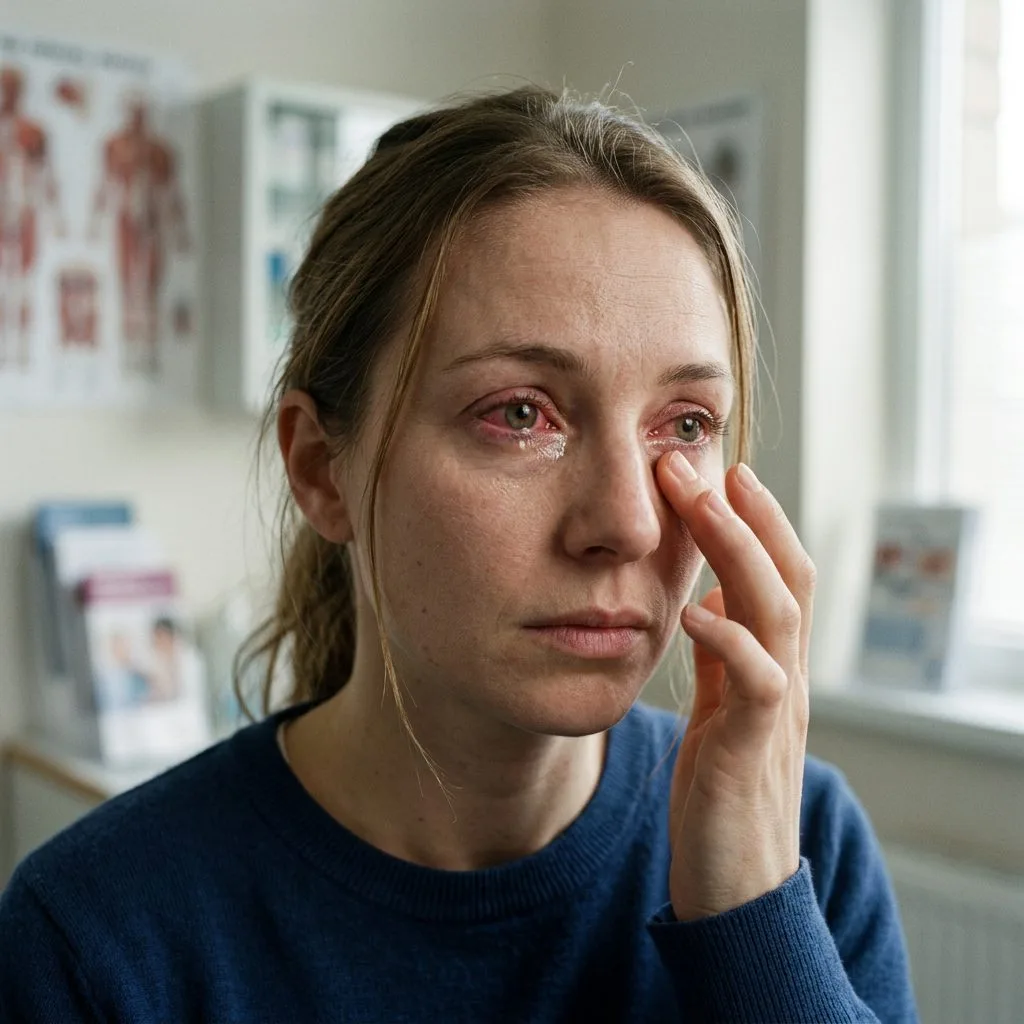
Subconjunctival hemorrhage is bleeding from a small blood vessel under the clear surface (conjunctiva) of your eye. Looks startling — bright red patch on the white — but rarely indicates anything serious.
Common triggers: coughing, sneezing, straining, vomiting, minor trauma, rubbing the eye. Sometimes spontaneous, especially in older adults on blood thinners.
Do I have subconjunctival hemorrhage? Common signs
If most of these describe what you're experiencing, telehealth may be a good next step:
What causes it
Vessel rupture from strain (coughing, sneezing, vomiting, lifting), minor eye trauma, eye rubbing, contact lens use, blood thinners, high blood pressure, rarely bleeding disorders.
Is it contagious?
No.
If your eye looks like a horror movie but doesn't hurt and your vision is fine — it's almost certainly this. Boring story, scary appearance.
Can it be treated online?
Routine subconjunctival hemorrhage is well-suited to telehealth. Recurring episodes warrant BP check and bleeding workup.
How subconjunctival hemorrhage is treated
No treatment usually needed. Artificial tears if mild irritation. Cool compresses first 24 hours, then warm compresses after. Check blood pressure — undiagnosed HBP is a common trigger. Review blood thinners — discuss with prescriber if recurrent.
Self-care while you wait
- No specific treatment
- Artificial tears if uncomfortable
- Avoid eye rubbing
- Cool compress first day, warm after
- Check blood pressure if recurrent
- Take photo to track progression
- Don't worry — it looks worse than it is
How long does it last?
Spreads slightly over 24 hours, then fades 1–2 weeks. Color goes red, then orange, then yellow, then gone.
Frequently asked questions
Should I be worried?
Almost never. Looks dramatic, no consequences.
Why does it keep happening?
Recurrent episodes suggest uncontrolled BP, blood thinners, or bleeding disorder. Get evaluated.
Can I still wear my contacts?
Usually yes — it doesn't affect vision.
Will I have a scar?
No — heals completely.
Should I take it easy?
No restrictions. Just avoid more straining/coughing.