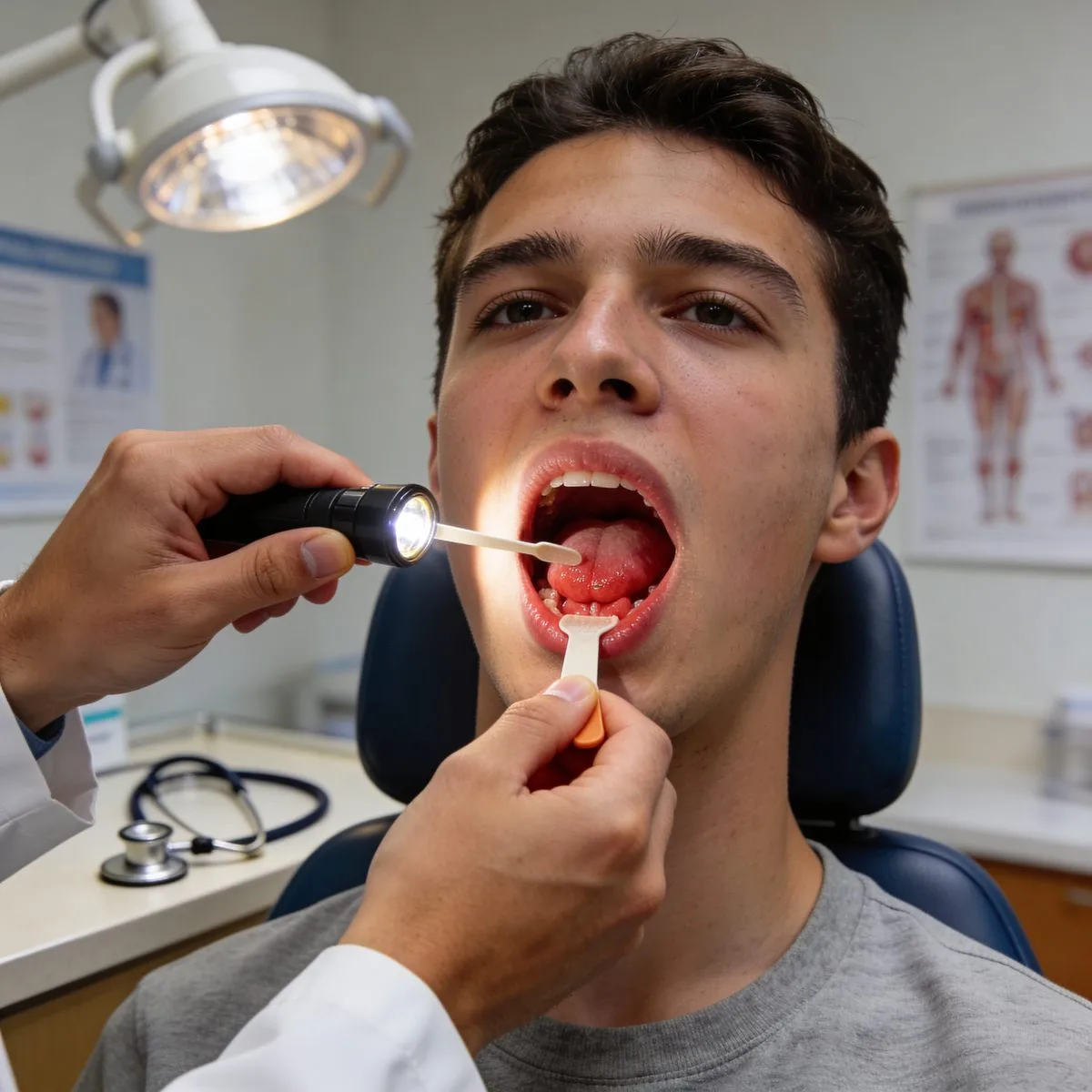
A sudden, severe sore throat with fever and swollen tonsils — often with white patches and tender neck glands but no cough — points to strep throat, a bacterial infection. Unlike a viral sore throat, strep is treated with antibiotics (usually penicillin or amoxicillin) to speed recovery and prevent complications, so the most useful step is to get evaluated rather than wait it out. A licensed clinician can review your symptoms online and, when strep is likely, send an antibiotic to your pharmacy the same day.
Seek emergency care if: you have trouble breathing or swallowing your own saliva, drooling, a muffled "hot potato" voice, or can't fully open your mouth — these can signal a peritonsillar abscess and need the ER immediately.
See a clinician nowWhat is strep throat?
Strep throat is a bacterial infection of the throat and tonsils caused by group A Streptococcus (GAS). It accounts for about 5–15% of adult sore throats and up to 30% of sore throats in children. Most sore throats — even painful ones with fever — are viral.
The reason strep matters: untreated, it can lead to rheumatic fever (an autoimmune complication affecting the heart and joints) in a small percentage of cases. Antibiotic treatment essentially eliminates that risk.
Classic strep is a sudden, severe sore throat with painful swallowing, fever, swollen tender lymph nodes in the neck, and white patches on red tonsils — without the cough, runny nose, or hoarseness that suggest a virus.
Do I have strep throat? Common signs
If most of these describe what you're experiencing, telehealth is a reasonable next step:
What causes it
Strep throat is caused by group A Streptococcus pyogenes bacteria. Transmission is through respiratory droplets — coughs, sneezes, shared utensils or drinks, or touching surfaces an infected person touched then touching your mouth or nose. Outbreaks are common in households and schools.
Is it contagious?
Yes — very contagious. Untreated strep is contagious from before symptoms appear until 1–3 weeks after. On antibiotics, you stop being contagious roughly 24 hours after the first dose, which is why most schools require 24 hours on antibiotics plus no fever before returning.
Less than 1 in 3 sore throats in adults is actually strep — and the rest don't benefit from antibiotics.
Can it be treated online?
Telehealth works well for strep evaluation. A clinician walks through the modified Centor criteria — fever history, exudate (pus) on tonsils, tender anterior cervical lymph nodes, absence of cough, age — and decides next steps. For adults with classic high-probability presentations, empiric treatment is reasonable per current guidelines. For lower-probability cases or pediatric patients, a rapid strep test is often recommended.
How strep throat is treated
First-line antibiotic is penicillin V for 10 days, or a single shot of penicillin G benzathine for adherence. Amoxicillin is equally effective and often more palatable. For penicillin-allergic patients, cephalexin, clindamycin, or azithromycin are alternatives. Pain relief with acetaminophen or ibuprofen, plus throat soothers (warm tea with honey, salt water gargles) helps while waiting for antibiotics to work.
Self-care while you wait
- Rest and stay hydrated
- Salt water gargle (1/4 tsp salt in 8 oz warm water)
- Warm liquids — tea with honey is classic
- Cold treats like popsicles can numb pain
- OTC pain relievers (acetaminophen or ibuprofen)
- Replace your toothbrush after starting antibiotics
- Stay home until at least 24 hours on antibiotics and fever-free
How long does it last?
Untreated strep typically clears in 7–10 days but you stay contagious longer. On antibiotics, symptoms usually improve within 24–48 hours and resolve within a few days. Complete the full antibiotic course even when you feel better — partial treatment is a risk factor for rheumatic fever.
Frequently asked questions
Can strep be treated without a test?
For adults with high-probability presentations — classic symptoms, no cough, fever, exudate — current guidelines support empiric treatment. For uncertain cases or for children, testing is generally recommended.
Why complete the full antibiotic course?
Stopping early can leave residual bacteria that drive recurrence and, more importantly, increase the small risk of rheumatic fever — an autoimmune complication that can damage heart valves.
Can I go back to work or school the next day?
Yes — once you've been on antibiotics for 24 hours and your fever has resolved, you're generally considered non-contagious.
What if I keep getting strep?
Recurrent strep (multiple episodes in a year) sometimes warrants ENT evaluation. Possible causes include household contact carriage, biofilm in the tonsils, or chronic tonsillitis — sometimes tonsillectomy is considered.
Is mono different from strep?
Yes — mononucleosis (Epstein-Barr virus) causes a similar sore throat but typically with extreme fatigue, swollen lymph nodes throughout the body, and an enlarged spleen. Mono needs blood testing to confirm and is not treated with antibiotics.