What is psoriasis?
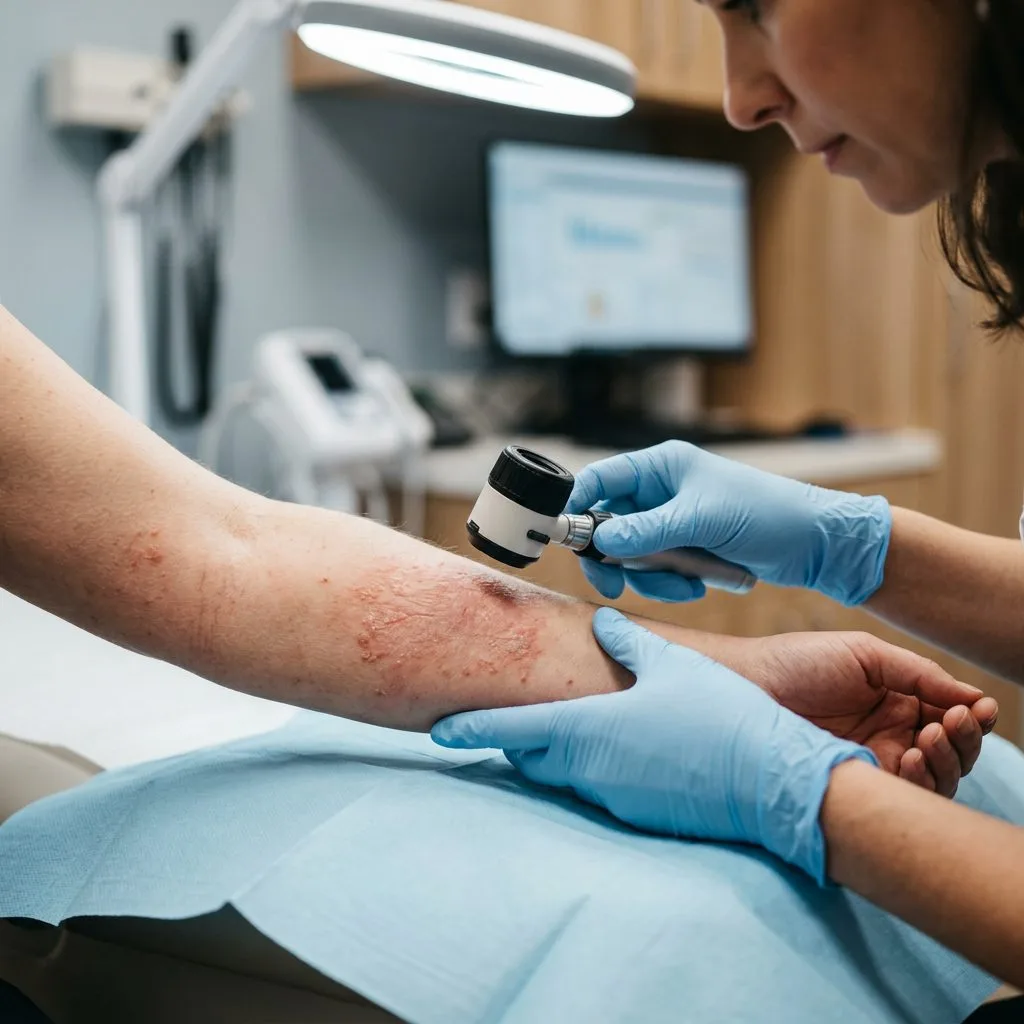
Psoriasis is a chronic autoimmune skin condition where the immune system speeds up skin cell turnover, creating thick, scaly plaques. About 3% of US adults have it. Most common form is plaque psoriasis, affecting elbows, knees, scalp, and lower back.
It's not contagious or caused by hygiene. It's associated with other conditions including psoriatic arthritis, cardiovascular disease, and depression. Effective treatment substantially improves quality of life.
Do I have psoriasis? Common signs
If most of these describe what you're experiencing, telehealth may be a good next step:
What causes it
Genetic predisposition plus an immune system that overproduces skin cells. Triggers include strep infections, skin injury (Koebner phenomenon), stress, certain medications (beta blockers, lithium, antimalarials), smoking, heavy alcohol, and cold/dry weather.
Is it contagious?
No.
The biggest mistake is assuming it's eczema or dandruff — psoriasis needs different (and stronger) treatment than either.
Can it be treated online?
Mild to moderate plaque psoriasis is well-suited to telehealth. Severe psoriasis, psoriatic arthritis, erythrodermic psoriasis, or anything needing biologics needs in-person dermatology.
How psoriasis is treated
Topical steroids are first-line — potency matched to body area. Calcipotriene (vitamin D analog) often combined with steroid (Taclonex). Tazarotene (Tazorac), tacrolimus, and pimecrolimus for sensitive areas. Severe cases use phototherapy, methotrexate, cyclosporine, or biologics (adalimumab, secukinumab, ustekinumab, etc.).
Self-care while you wait
- Moisturize aggressively — thick creams or ointments daily
- Gentle, fragrance-free cleansers
- Coal tar shampoo for scalp psoriasis (OTC)
- Manage stress
- Limit alcohol — it triggers and worsens flares
- Quit smoking
- Avoid skin injury
- Sunlight in moderation often helps (but use sunscreen on unaffected areas)
How long does it last?
Chronic. Most people experience flares and remissions. Sustained treatment can keep skin nearly clear long-term.
Frequently asked questions
Is psoriasis the same as eczema?
No. Psoriasis has thick, well-defined plaques with silvery scale; eczema is more diffuse, intensely itchy, often on flexor areas. Different treatments.
Can diet fix psoriasis?
Diet alone doesn't cure it, but obesity worsens it. Mediterranean diet has modest evidence. Specific elimination diets have weak evidence.
Will my kids get it?
If one parent has psoriasis, ~10% lifetime risk for kids; both parents, ~50%. Many people with the gene never develop active disease.
What's the deal with biologics?
Biologics target specific immune pathways and have transformed severe psoriasis treatment. They're injectable, expensive, and require ongoing monitoring — managed by dermatology.
Is psoriasis linked to other diseases?
Yes — psoriatic arthritis (up to 30% of psoriasis patients), cardiovascular disease, metabolic syndrome, depression. Comprehensive care matters.