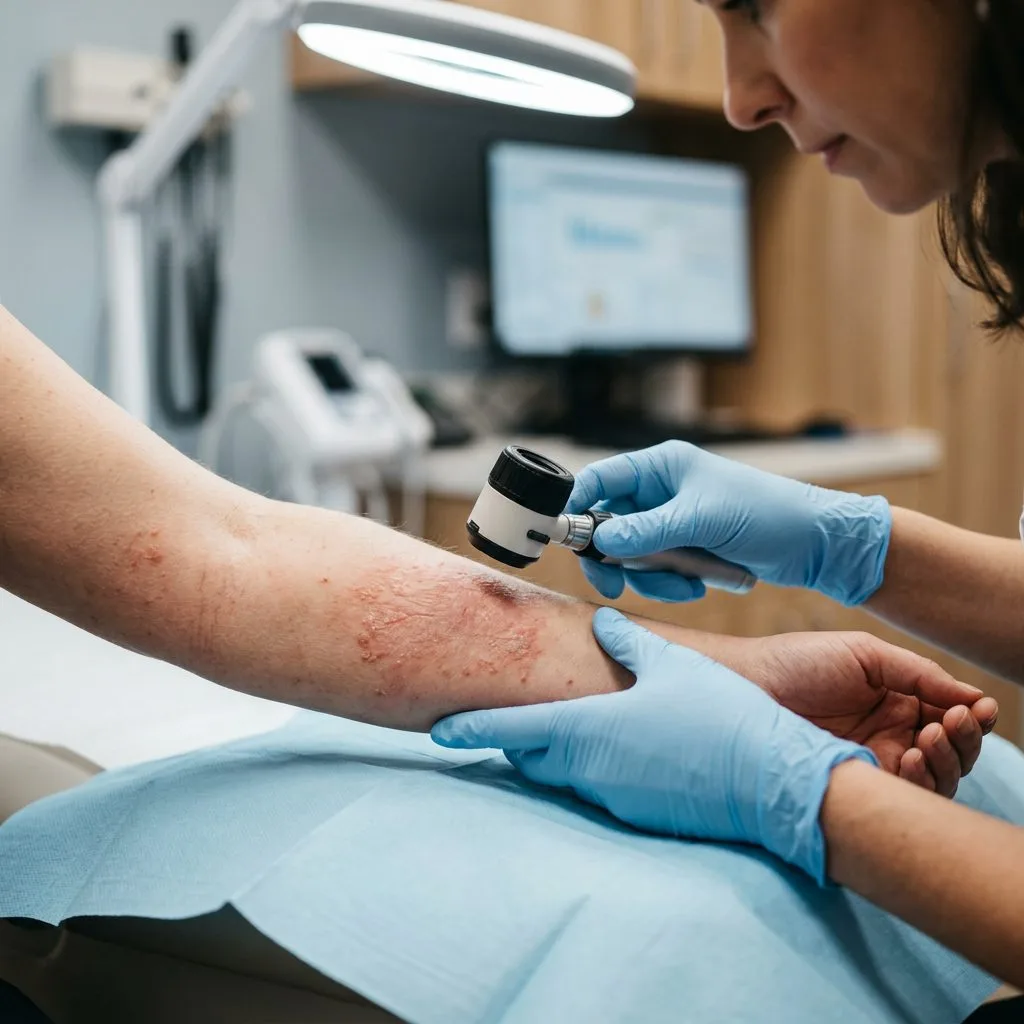
An intensely itchy rash with red streaks and blisters in lines or patches, appearing a day or two after being outdoors, is the classic allergic reaction to poison ivy, oak, or sumac. The first step is to wash the skin and anything that touched the plant with soap and water to remove the oil, then soothe the itch with cool compresses, calamine, and an over-the-counter steroid cream. Widespread or facial rashes often need a prescription oral steroid taper. A licensed clinician can review photos online and send a prescription to your pharmacy the same day when needed.
Seek emergency care if: you have trouble breathing or swallowing, swelling of the face or eyes with vision changes, or a severe widespread rash with fever — these need emergency care.
See a clinician nowWhat is poison ivy?
Poison ivy (and its cousins poison oak, poison sumac) causes allergic contact dermatitis from urushiol oil in the plant. About 85% of people are sensitive. Linear streaky red blisters in skin-exposed areas are characteristic.
Itchy rash typically appears 1–3 days after exposure and lasts 2–3 weeks. Treatment focuses on relief and severe cases need systemic steroids.
Do I have poison ivy? Common signs
If most of these describe what you're experiencing, telehealth may be a good next step:
What causes it
Allergic reaction to urushiol oil. Direct contact with plant or contaminated items (pets, clothes, tools, smoke from burning plants).
Is it contagious?
The rash itself is NOT contagious. Urushiol oil on skin, clothing, or pets can transfer to others until washed off.
The urushiol oil sticks for hours — if you washed within 10 minutes of exposure, you might have avoided the rash entirely.
Can it be treated online?
Routine poison ivy is well-suited to telehealth — photos confirm. Severe widespread cases (>20% body), eye involvement, face involvement with significant swelling, signs of secondary infection — may need in-person care.
How poison ivy is treated
Mild: topical steroids (over-the-counter hydrocortisone for limited; triamcinolone or clobetasol Rx for moderate). Calamine lotion. Cool compresses. Antihistamines for itch (cetirizine, diphenhydramine). Severe or widespread: oral prednisone 40–60mg tapered over 10–14 days — must complete full course to avoid rebound.
Self-care while you wait
- Wash exposed skin with soap and cool water within 10 min of exposure if possible
- Wash all clothing, gear, pets that may have oil
- Cool compresses for relief
- Calamine lotion or oatmeal baths
- Don't scratch — risk of infection
- Antihistamines for itch
- Don't cover with thick lotions or oils
- Don't burn poison ivy — smoke causes severe lung reaction
How long does it last?
Untreated: 2–3 weeks. With treatment: similar duration but with relief. New lesions can appear up to 2 weeks if oil wasn't washed off everything.
Frequently asked questions
Can it spread by scratching?
No — the fluid in blisters is NOT contagious. But oil on fingers can spread to other body parts. Wash hands.
Why does it appear in new places days later?
Either oil reactivation from contaminated items, or different exposure timing on different body areas.
Is the rash spreading?
Usually it appears in waves as the immune response unfolds, not actually spreading.
Will calamine alone work?
For mild cases, yes. Moderate-severe usually needs steroids.
Can I be 'immune'?
Some people don't react — but sensitivity can develop with repeated exposure.