What is night sweats?
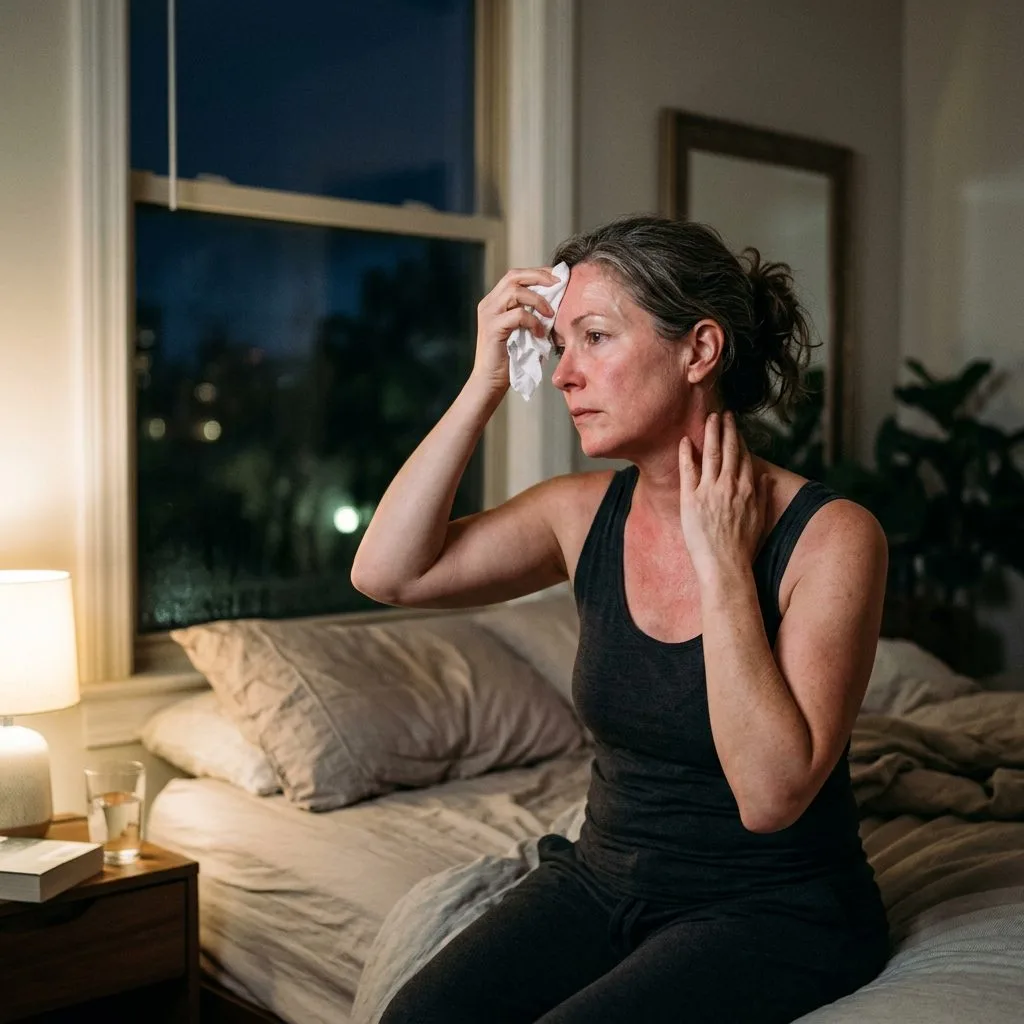
Night sweats are episodes of severe sweating during sleep that soak clothing and bedding — distinct from feeling warm or mild sweating. Causes range from common (menopause, medications) to serious (infection, lymphoma).
Evaluation focuses on patterns and accompanying symptoms. Most causes are benign and treatable.
Do I have night sweats? Common signs
If most of these describe what you're experiencing, telehealth may be a good next step:
What causes it
Menopause/perimenopause (most common in women 40+), hormonal changes (hyperthyroidism, low T), medications (antidepressants, hormone therapy, opioids, NSAIDs, decongestants), infections (TB, HIV, mononucleosis, endocarditis), cancers (lymphoma — classic 'B symptoms'), GERD, sleep apnea, anxiety, hypoglycemia, certain neuro conditions, low blood sugar.
Is it contagious?
Depends on cause (TB or HIV is contagious; menopause isn't).
If night sweats come with unintentional weight loss and persistent fevers — that triad needs in-person workup, not just symptom management.
Can it be treated online?
Routine night sweats with identifiable cause (menopause, medication) are well-suited to telehealth. Combined with weight loss, fever, lymphadenopathy, persistent unexplained sweats with no clear cause — need in-person workup.
How night sweats is treated
Treat underlying cause. Menopause-related: HRT, SSRIs (paroxetine), gabapentin, fezolinetant. Hyperthyroidism: antithyroid medication. Medication-induced: change drug if possible. Sleep apnea: CPAP. Infection: targeted treatment. Lifestyle: cool room, breathable bedding, avoid triggers (alcohol, spicy food, hot rooms).
Self-care while you wait
- Keep bedroom cool (65–68°F)
- Lightweight breathable bedding
- Moisture-wicking sleepwear
- Avoid alcohol, caffeine, spicy food before bed
- Manage stress
- Treat reflux if relevant
- Cool shower before bed
- Layered bedding so you can adjust
How long does it last?
Depends on cause. Menopausal: years. Medication-induced: resolves when changed. Infection-related: resolves with treatment.
Frequently asked questions
How is it different from feeling warm at night?
Night sweats soak clothes and bedding — far more than feeling warm. Frequency and severity matter.
Should I be worried about cancer?
Most night sweats aren't cancer. Combined with weight loss, fever, swollen lymph nodes — needs workup.
Will HRT help menopausal sweats?
Yes — very effective. Discuss risks and benefits with clinician.
Can SSRIs help?
Yes — low-dose paroxetine or other SSRIs can reduce hot flashes/night sweats in non-HRT candidates.
Is it hormonal in men too?
Low testosterone can cause night sweats in men. Testing and TRT if confirmed low.