What is mononucleosis?
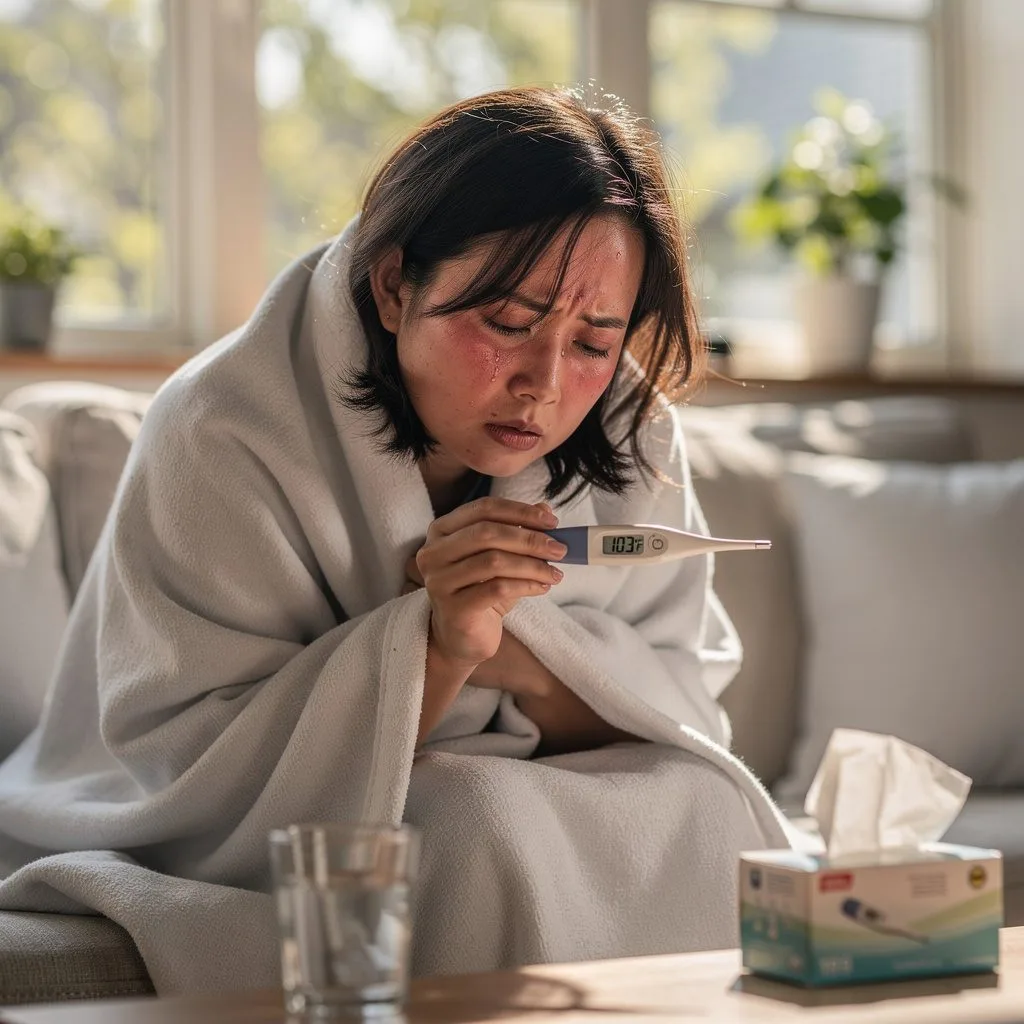
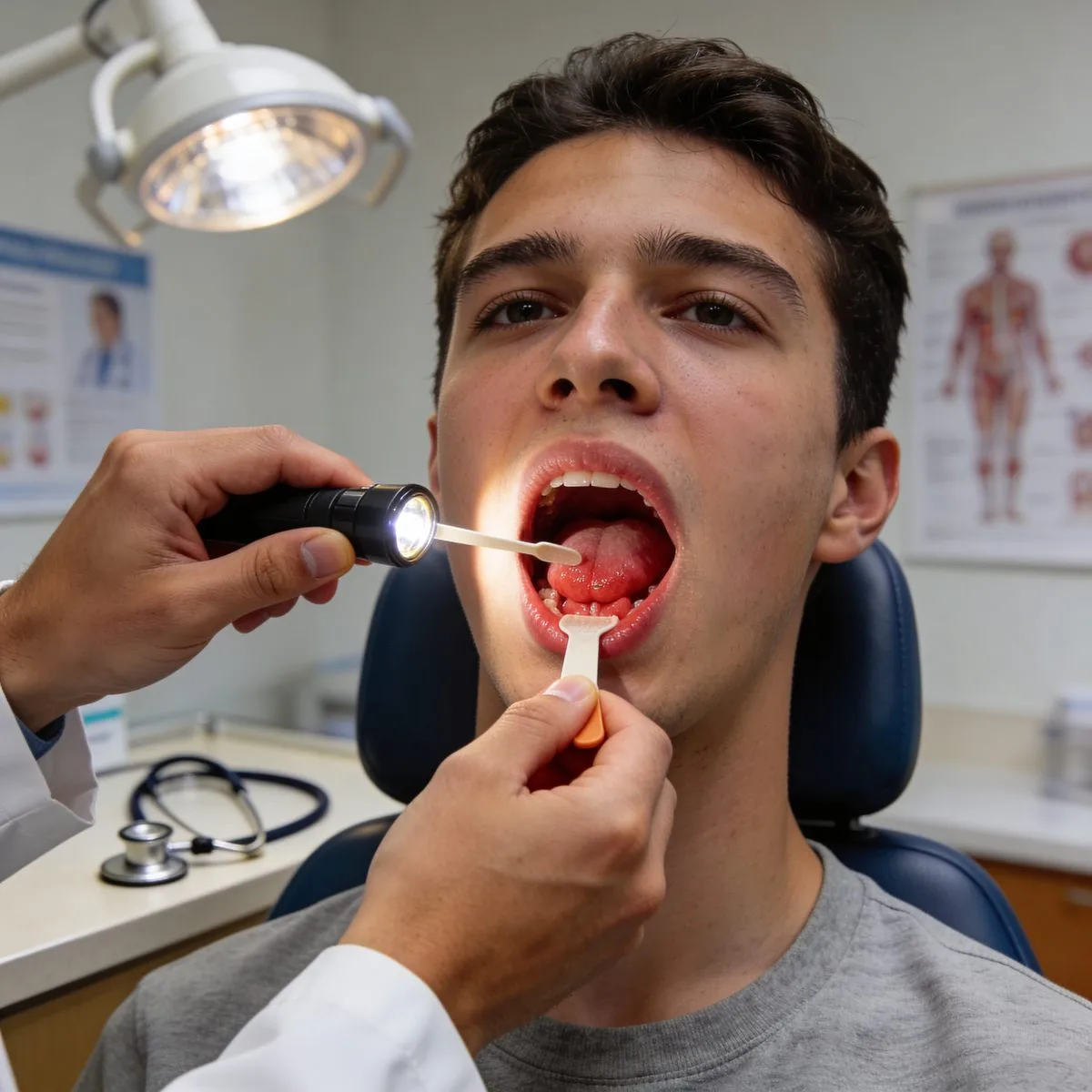
Infectious mononucleosis ("mono" or "kissing disease") is caused by Epstein-Barr virus (EBV) in most cases. Affects mostly teens and young adults. Characterized by severe sore throat, fatigue, fever, and swollen lymph nodes.
Recovery often takes 4–6 weeks; fatigue can linger months. Splenic enlargement creates rupture risk — avoid contact sports for 4 weeks minimum.
Do I have mononucleosis? Common signs
If most of these describe what you're experiencing, telehealth may be a good next step:
What causes it
Epstein-Barr virus (EBV) — about 90%. Cytomegalovirus (CMV), HHV-6, or HIV can cause mono-like illness. EBV transmitted via saliva.
Is it contagious?
Yes — through saliva (kissing disease). Also shared drinks, utensils, kissing, oral sex.
The biggest pitfall is missing splenic rupture — no contact sports for at least 4 weeks even if you feel better, because the spleen can be dangerously enlarged.
Can it be treated online?
Routine mono is well-suited to telehealth — symptom pattern is recognizable. Severe complications (significant splenomegaly, hepatitis, airway compromise from massive tonsil swelling, hemolytic anemia) need in-person care.
How mononucleosis is treated
No specific antiviral. Supportive: rest, hydration, NSAIDs/acetaminophen, throat care. Steroids only for severe complications (airway compromise, hemolytic anemia). Avoid amoxicillin — causes rash in EBV. Avoid contact sports for 4 weeks minimum (spleen rupture risk).
Self-care while you wait
- Rest as much as needed
- Hydrate generously
- Soft cool foods if throat is severe
- NSAIDs or acetaminophen for symptoms
- No contact sports or heavy exercise for 4+ weeks
- Don't share drinks, utensils, towels, lipstick
- Avoid kissing during active illness
- Be patient — recovery takes weeks
How long does it last?
Acute symptoms 4–6 weeks. Fatigue can linger 3–6 months. Most people fully recover.
Frequently asked questions
How long am I contagious?
Virus is shed in saliva for months after illness. Active disease most contagious. Don't share drinks/kiss during illness.
When can I return to sports?
Minimum 4 weeks — longer for contact sports. Spleen rupture is the danger. Many physicians say 6+ weeks for contact sports.
Will I get mono more than once?
Once infected with EBV, you're typically immune. Reactivation is rare and usually mild.
Why no amoxicillin?
People with mono treated with amoxicillin develop characteristic rash in ~90%. Not a true allergy but characteristic enough to avoid the drug if mono suspected.
Can it become chronic?
Some develop chronic fatigue-like syndrome after mono. Most fully recover within 6 months.