What is molluscum contagiosum?
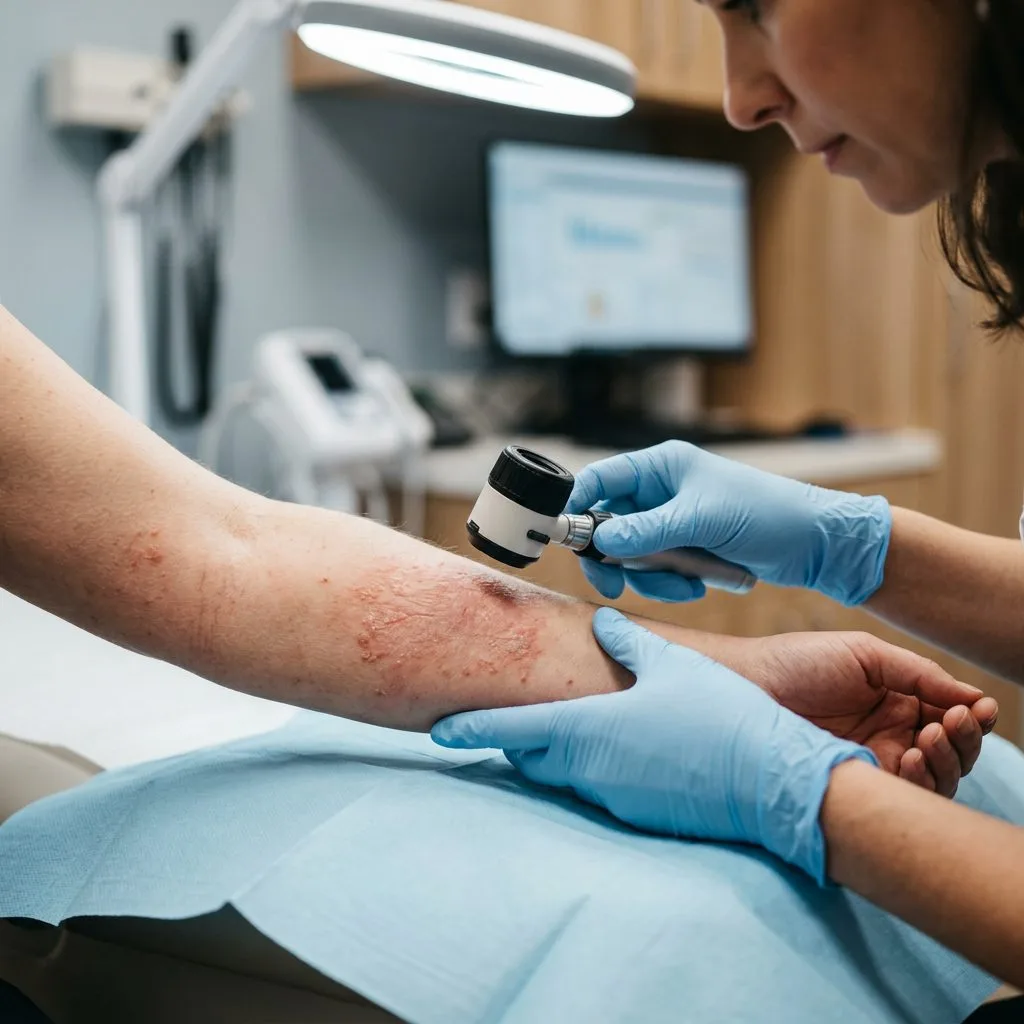
Molluscum contagiosum is a viral skin infection caused by a poxvirus. Common in children and immunocompromised. Causes small dome-shaped flesh-colored bumps with central dimple ("umbilication").
Most resolve spontaneously over 6 months to 2 years. Treatment is for cosmetic reasons, transmission prevention, or persistent cases.
Do I have molluscum contagiosum? Common signs
If most of these describe what you're experiencing, telehealth may be a good next step:
What causes it
Molluscum contagiosum virus. Spread by direct skin contact, contaminated towels/clothing, autoinoculation from scratching. In adults, often sexually transmitted when in genital area.
Is it contagious?
Yes — through direct contact.
In kids, the recommendation is increasingly to leave them alone — they always go away on their own, and aggressive treatment causes scarring.
Can it be treated online?
Molluscum is well-suited to telehealth — photos confirm. Eye-area lesions, extensive cases in immunocompromised, or refractory cases need in-person care.
How molluscum contagiosum is treated
Watchful waiting is often best for kids — spontaneous resolution. In-office: cantharidin blistering agent applied by clinician — most common. Curettage — physical removal. Cryotherapy. Topical: imiquimod, podofilox, topical KOH. New FDA-approved: berdazimer gel (Zelsuvmi). Genital molluscum in adults treated more aggressively due to STI consideration.
Self-care while you wait
- Avoid scratching — spreads to other body areas
- Cover lesions when participating in sports/swimming
- Don't share towels, clothes
- Treat underlying eczema (associated)
- Keep skin moisturized
- Watchful waiting often reasonable in healthy kids
- Don't pick or squeeze
How long does it last?
Individual lesions: 2 months to 4 years. Average: 6 months. With treatment, faster.
Frequently asked questions
Should I treat my child?
Often no — spontaneous resolution is reliable. Treatment reasonable for many lesions, painful/embarrassing locations, or extensive spread.
Can my kid go to school?
Yes — usually allowed with lesions covered. Sports involving close skin contact may want covered or restricted.
Will it leave scars?
Usually no — heals without scarring if not picked. Aggressive treatments can occasionally scar.
Can I get it from someone with it?
Yes — through close skin contact. Common in households.
Why is it more common in kids with eczema?
Disrupted skin barrier allows easier viral entry. Treating underlying eczema helps prevent spread.