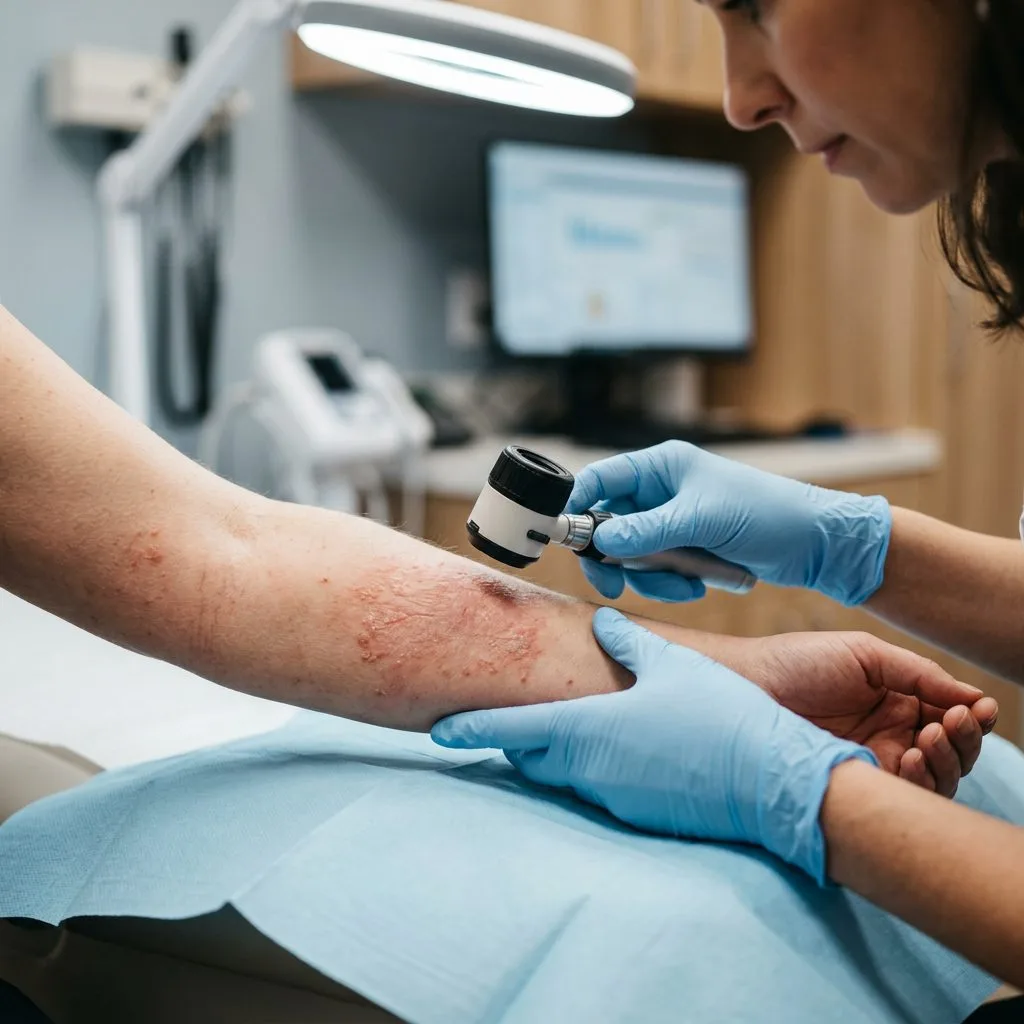
A fine, itchy or prickly rash of tiny bumps in skin folds and covered areas during hot, humid weather is almost always heat rash (prickly heat) — sweat trapped under blocked ducts. The most useful step is to cool down: move somewhere cooler, remove tight or sweaty clothing, take a cool shower, and let skin air-dry. Most heat rash fades within a few days. A licensed clinician can confirm the diagnosis from a photo online and prescribe a short course of a low-strength topical steroid for itching, or an antibiotic if a duct has become infected.
Seek emergency care if: you feel faint, confused, or nauseated, your skin is hot with no sweating, or you have a high body temperature — these point to heat exhaustion or heat stroke, which are emergencies. Call 911 for suspected heat stroke.
See a clinician nowWhat is heat rash?
Heat rash, also called miliaria or prickly heat, develops when sweat ducts become blocked and sweat is trapped under the skin. It produces clusters of tiny bumps and a prickly or itchy feeling. It is very common in hot, humid weather, during exercise, under tight clothing, and in skin folds where sweat collects.
It is most common in babies and in adults who sweat heavily, but anyone can get it. Heat rash is harmless and self-limited — the main goal is to cool the skin and keep the area dry.
Do I have heat rash? Common signs
If most of these describe what you're experiencing, an online evaluation is a reasonable next step:
What to do right now
- Move to a cooler, less humid environment with fans or air conditioning
- Remove tight, damp, or heavy clothing; choose loose, breathable fabrics
- Take a cool shower or apply a cool compress, then let skin air-dry
- Avoid heavy creams, ointments, and powders that can further block pores
- Don't scratch — it can break the skin and invite infection
- Take a clear, well-lit photo so a clinician can confirm it is heat rash
How an online clinician can help
Heat rash is well-suited to telehealth. A clinician reviews your photo and history, confirms it is miliaria rather than an allergic, fungal, or infected rash, and gives targeted cooling and skin-care advice. For persistent itching, they may prescribe a short course of a low-strength topical steroid; if a blocked duct has become infected, they may prescribe a topical or oral antibiotic.
Telehealth is not the right path for: any signs of heat exhaustion or heat stroke (a medical emergency), a rapidly spreading rash with fever, or a rash that does not improve with cooling and may be something else entirely.
Heat rash is the skin's way of saying it's overheating — the cure is almost always cooling down, not a prescription.
How heat rash is treated
The foundation of treatment is cooling the skin and keeping it dry — this alone resolves most cases within a few days. For itch relief, cool compresses, calamine, and oral antihistamines can help. A clinician may prescribe a low-potency topical steroid for stubborn itching or a topical/oral antibiotic if pustular (infected) heat rash develops. Prevention focuses on staying cool, wearing loose clothing, and avoiding pore-blocking products.
How long does it last?
Once the skin can cool down and stay dry, heat rash usually fades within a few days. If it keeps coming back, the key is preventing overheating and sweat buildup. A rash that lingers or worsens despite cooling should be re-evaluated, as it may be a different condition.
Frequently asked questions
How do I get rid of heat rash fast?
Cool down. Move to a cooler, less humid place, remove tight or sweaty clothing, take a cool shower, and let skin air-dry. Most heat rash fades within a few days once the skin can cool and the sweat ducts open back up.
What is the difference between heat rash and an allergic rash?
Heat rash appears in hot, sweaty conditions, mostly in skin folds, and improves with cooling. Allergic or contact rashes are linked to a substance you touched or took and often appear where it contacted the skin. A clinician can tell them apart from a photo.
Can heat rash be treated online?
Yes. Most heat rash needs only cooling, but a clinician can confirm the diagnosis from a photo, recommend soothing measures, and prescribe a short course of a low-strength topical steroid or an antibiotic if a duct has become infected.
Is heat rash dangerous?
Heat rash itself is harmless and self-limited. But it can signal that the body is struggling to cool down. Feeling faint, confused, very hot with no sweating, or a high body temperature point to heat exhaustion or heat stroke, which are emergencies.
How do I prevent heat rash?
Stay cool, wear loose, breathable clothing, avoid heavy creams that block pores, take cool showers after sweating, and use fans or air conditioning in hot weather.