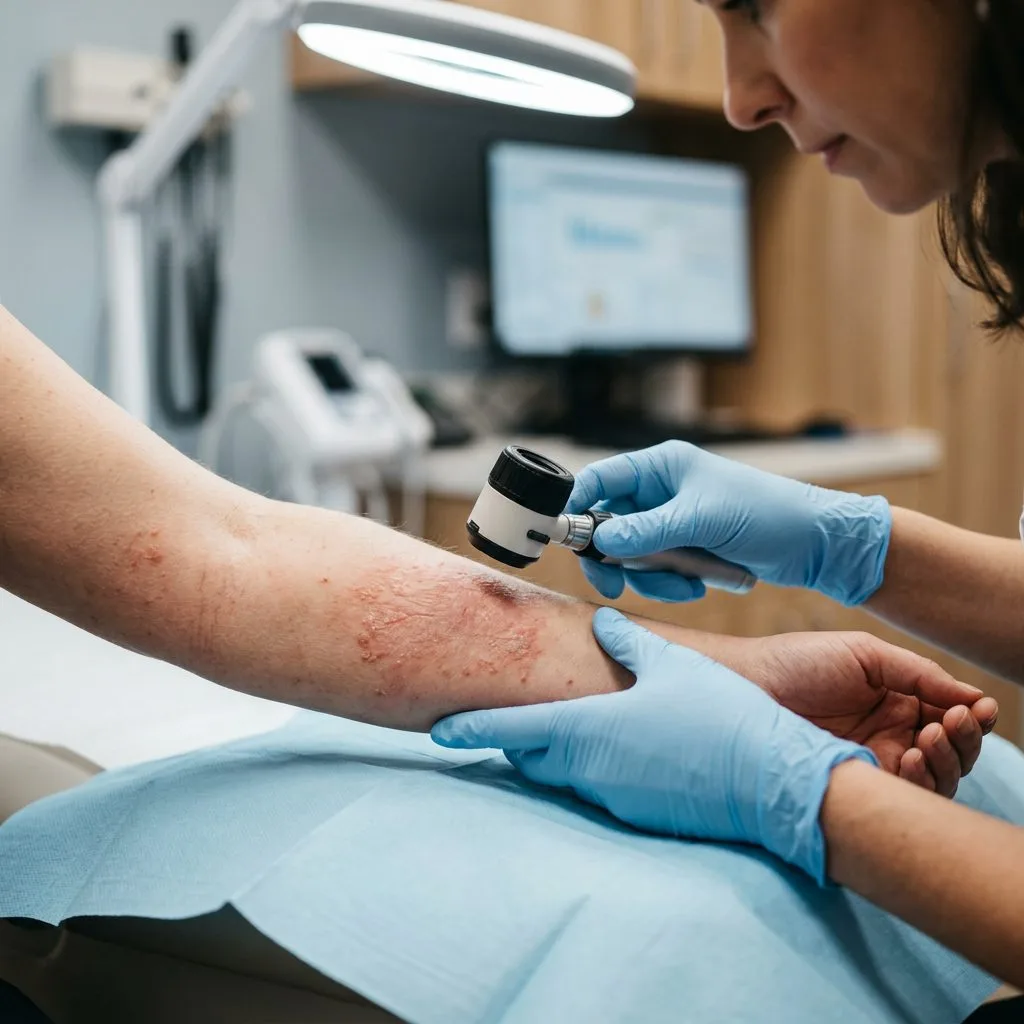
What is contact dermatitis?
Contact dermatitis is skin inflammation from direct contact with an irritant or allergen. Irritant type is more common (from harsh chemicals, frequent water exposure). Allergic type involves immune sensitization (nickel, fragrance, latex, poison ivy, hair dye).
Both respond to avoidance plus topical steroids. Patch testing can identify specific allergens for recurrent cases.
Do I have contact dermatitis? Common signs
If most of these describe what you're experiencing, telehealth may be a good next step:
What causes it
Irritants: harsh soaps, frequent hand washing, chemicals, solvents. Allergens: nickel (jewelry, snaps), fragrance, latex, hair dye (PPD), preservatives, neomycin, urushiol (poison ivy/oak), rubber accelerators.
Is it contagious?
No.
If your rash always appears under your watch band, around your belt buckle, or behind your ear from earrings — nickel allergy is the prime suspect.
Can it be treated online?
Routine contact dermatitis is well-suited to telehealth. Severe, widespread, or treatment-resistant cases benefit from dermatology and patch testing.
How contact dermatitis is treated
Identify and avoid trigger — central to treatment. Topical steroids — match potency to body area: hydrocortisone for face, triamcinolone for body, clobetasol for hands/feet. Emollients to restore barrier. Antihistamines for itch. Patch testing by dermatology for recurrent allergic cases.
Self-care while you wait
- Identify and avoid trigger
- Gloves for chores, gardening, dishwashing
- Hypoallergenic, fragrance-free soaps and laundry detergent
- Nickel-free jewelry (stainless steel, titanium)
- Moisturize regularly
- Cool compresses for itch
- Don't use suspected trigger products
- Read labels for fragrance, parabens, formaldehyde releasers
How long does it last?
Most clears in 1–2 weeks with avoidance and treatment. Recurs with re-exposure.
Frequently asked questions
Can I be allergic to my soap?
Yes — fragrance and preservatives in soap are common allergens. Try fragrance-free, sensitive-skin formulas.
Why is my belly red around the button?
Nickel allergy from jeans button is classic. Paint the back of button with clear nail polish or wear a layer between.
How do I know what triggered it?
Look for patterns — where, when, with what activity. Patch testing identifies allergens definitively.
Will it become permanent?
Once sensitized, allergic reactions persist — but you can manage by avoiding triggers.
Are hypoallergenic products safe?
Generally lower risk but no universal standard. Some 'natural' products contain common allergens (fragrance, essential oils).