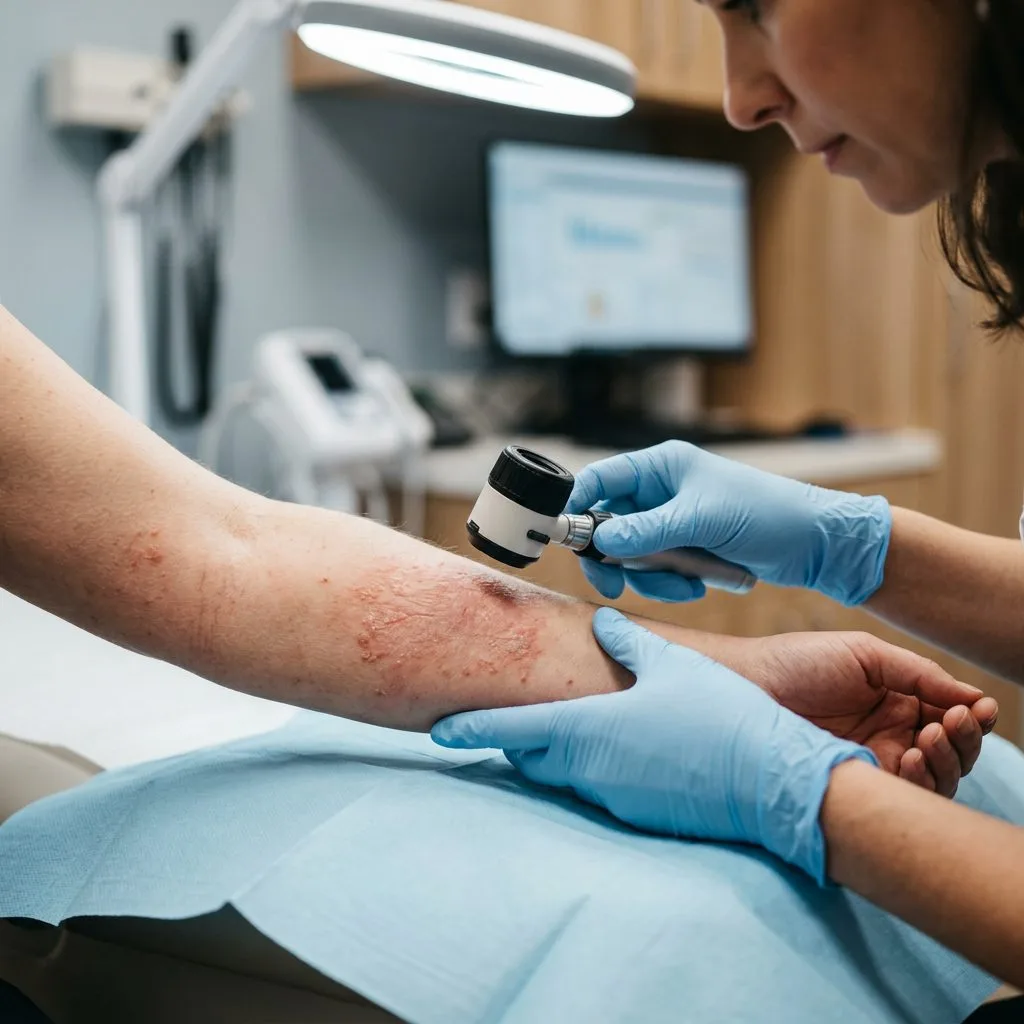
What is chickenpox?
Chickenpox is a viral infection caused by varicella-zoster virus, the same virus that later causes shingles. Highly contagious and once near-universal in childhood — now rare in the US due to vaccination.
In healthy children, usually mild. In adolescents, adults, pregnant women, and immunocompromised, complications more common. Antivirals help if started within 24 hours of rash onset.
Do I have chickenpox? Common signs
If most of these describe what you're experiencing, telehealth may be a good next step:
What causes it
Varicella-zoster virus, spread through respiratory droplets and direct contact with lesions.
Is it contagious?
Highly — from 1–2 days before rash until all blisters crusted (usually 5–7 days into illness).
Vaccinated kids can still get breakthrough chickenpox — usually much milder, fewer lesions, no blisters or fever.
Can it be treated online?
Routine chickenpox in low-risk healthy patient is well-suited to telehealth. Adults, pregnancy, immunocompromised, complications (pneumonia, encephalitis), or severe cases — need in-person care.
How chickenpox is treated
Mild cases: supportive — antihistamines for itch, acetaminophen for fever (NOT aspirin — Reye's syndrome risk in kids). Antivirals (acyclovir, valacyclovir) for adolescents, adults, pregnancy, immunocompromised — within 24 hours of rash. Topical calamine lotion for itch.
Self-care while you wait
- Keep nails short to prevent scratching damage
- Cool baths with oatmeal or baking soda for itch
- Antihistamines (cetirizine, diphenhydramine) for itch
- Loose cool clothing
- Stay home until lesions crusted (about a week)
- Don't share towels, bedding
- Avoid pregnant women and immunocompromised contacts
How long does it last?
5–10 days from first lesion to all crusted.
Frequently asked questions
Can vaccinated people get it?
Yes — breakthrough cases occur but usually much milder. Vaccine ~85% effective for any disease, ~95% for severe disease.
How do I know it's chickenpox vs. another rash?
Lesions in different stages (red spots, blisters, crusts simultaneously) is highly characteristic. Photos help diagnosis.
Will it leave scars?
Mild lesions don't usually scar. Severe or infected ones can. Don't scratch.
When can my kid return to school?
After all lesions crusted (typically 5–7 days from first lesion appearance).
Can adults get it from kids with chickenpox?
Yes if not immune. Adults often get more severe disease. Vaccinate if non-immune.