What is blepharitis?
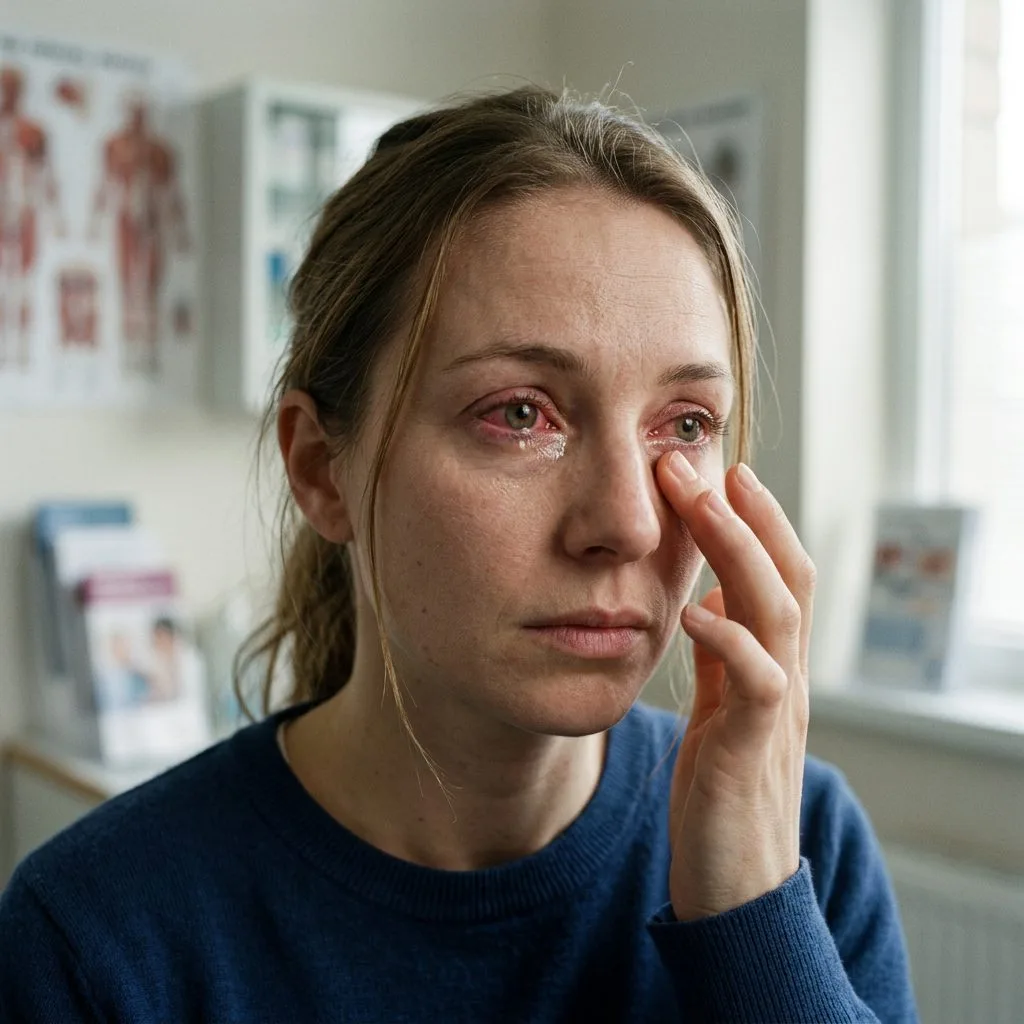
Blepharitis is chronic inflammation of the eyelid margins — usually involving the meibomian (oil) glands and/or anterior eyelid (eyelash base). Extremely common, often associated with dry eye and rosacea.
Cornerstone treatment is consistent eyelid hygiene — warm compresses and lid scrubs. Stubborn cases benefit from topical or oral antibiotics.
Do I have blepharitis? Common signs
If most of these describe what you're experiencing, telehealth may be a good next step:
What causes it
Anterior: Staph bacteria overgrowth on lashes, sometimes Demodex mites. Posterior (MGD): meibomian gland dysfunction — oil glands plugged. Often coexists with rosacea, seborrheic dermatitis, dry eye.
Is it contagious?
Mildly — through shared towels, makeup, close contact.
No medication fixes blepharitis as well as consistent lid hygiene — 5 minutes morning and evening for life, basically.
Can it be treated online?
Blepharitis is well-suited to telehealth. Severe cases with corneal involvement, persistent symptoms despite treatment, or vision changes need in-person eye care.
How blepharitis is treated
Lid hygiene foundation: warm compresses 5–10 min twice daily, lid scrubs with diluted baby shampoo or commercial lid wipes (Cliradex, OcuSoft). Topical antibiotics: erythromycin or bacitracin ointment for anterior. Azithromycin drops (AzaSite). Oral antibiotics: doxycycline 50–100mg daily for severe or refractory MGD-related. Omega-3 supplements help.
Self-care while you wait
- Warm compress 5–10 min twice daily
- Lid scrubs with diluted baby shampoo or commercial wipes
- Don't share eye makeup or towels
- Replace mascara every 3 months
- Manage coexisting rosacea
- Omega-3 fish oil 1–2g daily
- Avoid eye rubbing
- Use preservative-free artificial tears if dry eye coexists
How long does it last?
Chronic. Symptoms come and go. Consistent hygiene keeps it controlled.
Frequently asked questions
Why do my eyelashes have crust in the morning?
Classic blepharitis — overnight, oils and bacteria accumulate. Morning lid hygiene clears it.
Can I wear contact lenses?
Usually yes during quiet periods. May need to skip during flares. Daily disposables tolerated best.
Do tea tree oil products help?
For Demodex-related blepharitis, yes. Diluted tea tree oil (Cliradex wipes) reduces mite load.
Will it cause vision loss?
Rarely — but chronic blepharitis can damage cornea over time. Sustained treatment matters.
How is it related to dry eye?
Strongly linked — MGD causes evaporative dry eye. Treating both together gives best results.